PHOTO: SHUTTERSTOCK / SERGIY PALAMARCHUK


ALLE DORHOUT
O
KYIV
UKRAINE

TEXT:
LIEKE VAN DEN KROMMENACKER
invasion of Ukraine online. Almost 1,800 kilometres away, her father was picking blackcurrants to make jam. ‘It’s not all doom and gloom here,’ said Dorhout from his office in the Podil area to the north of the city centre, which overlooks the beautiful Pyrohoshcha church. ‘A lot of people only get their news about Ukraine via nos.nl or nu.nl. This gives a fairly
one-sided impression of what’s going on.’
Don’t misunderstand him; Dorhout, who has been the Dutch ambassador in Ukraine for the past year, would be the last person to play down life in a country in the grips of war. ‘The war goes on 24/7 here. I sometimes talk to people who’ve been on the front line or in Russian prisoner-of-war camps; it’s harrowing. I recently shook hands with someone I was talking to, and thought: his hand feels a bit strange. It turned out that two of his fingers had been cut off.’
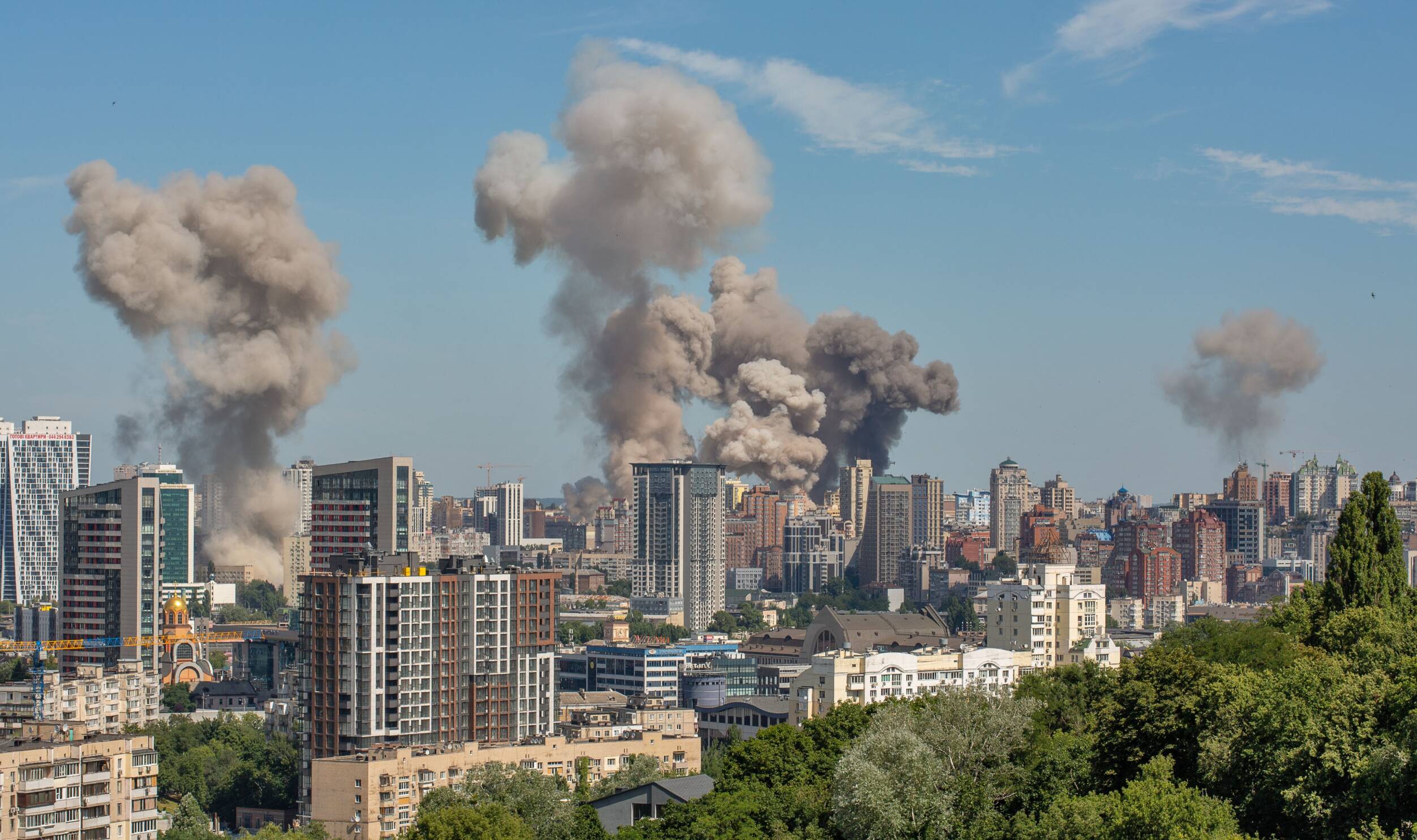
The contrast is alienating: Dorhout, who works in a relatively safe place in Kyiv, where there’s a good anti-aircraft system, is talking about the devastating impact of Russian aggression. About cruise missiles that sometimes skim his house. About meeting displaced Ukrainians who have fled occupied areas in search of safety in the West. About Ukrainian colleagues whose families and friends are affected by the war. ‘I don’t actively have to deal with all these problems, but I come across them on a daily basis. I definitely have a much easier life than these people: at least I can go for a walk at the weekend, assuming things are relatively calm and no visits have been planned.’
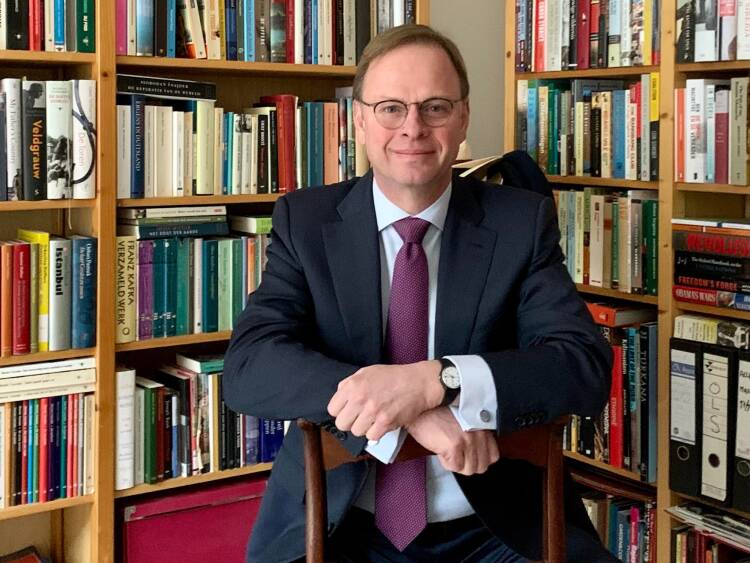
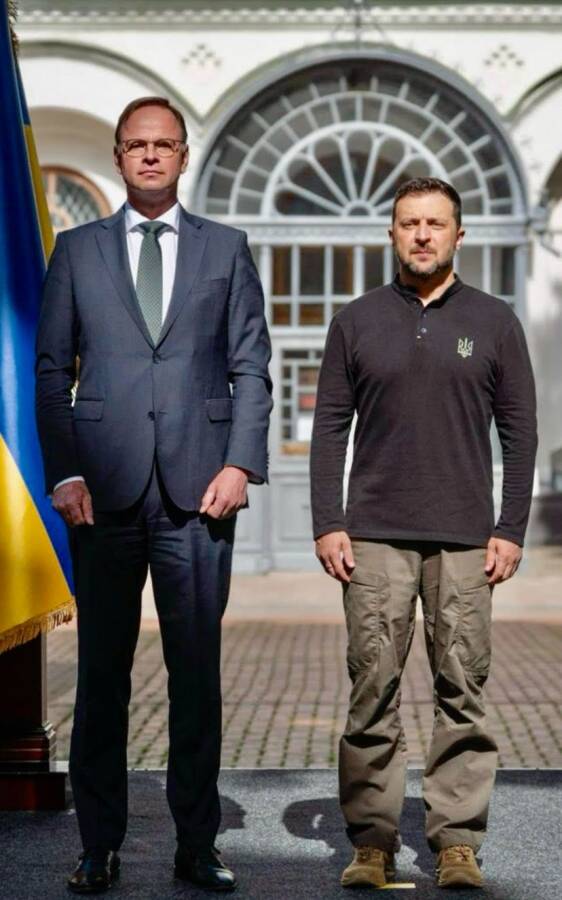
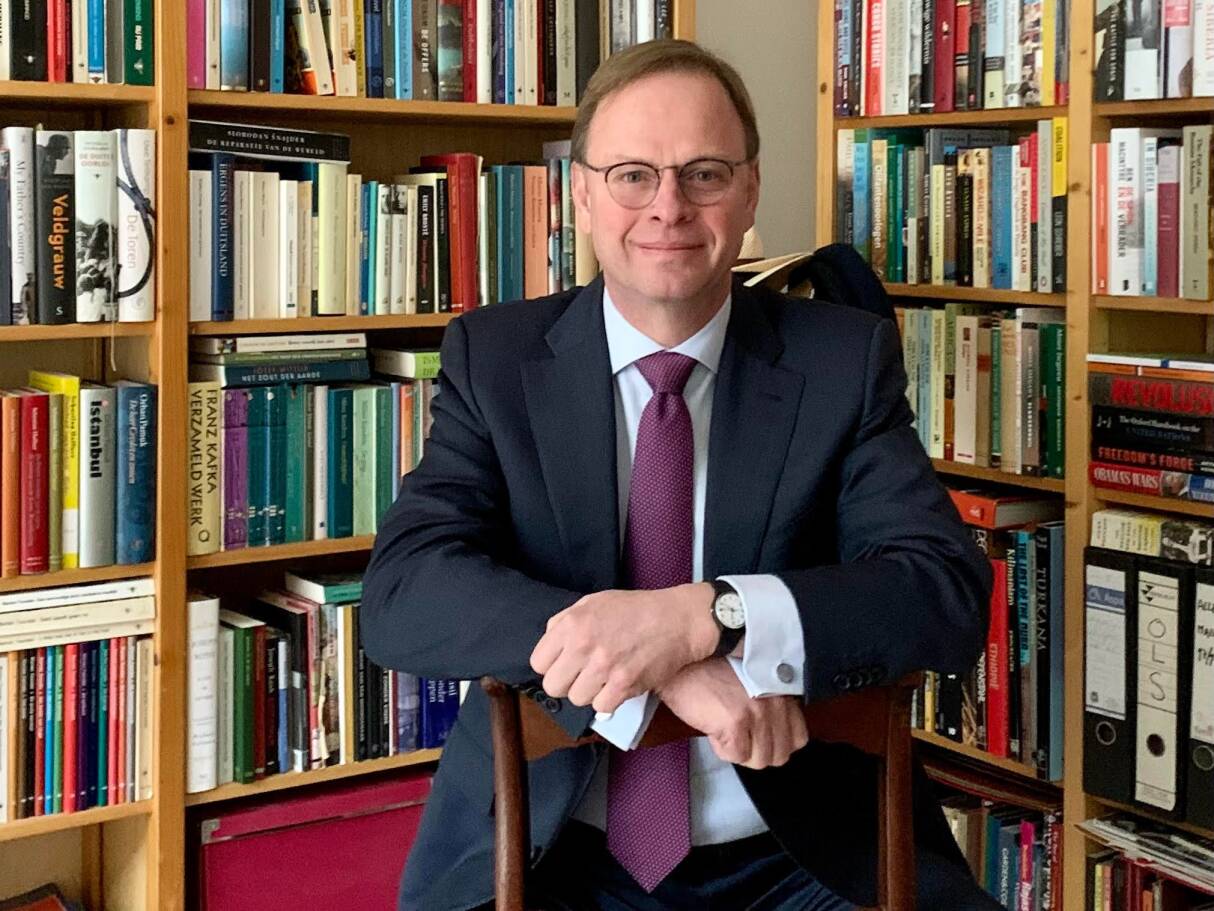
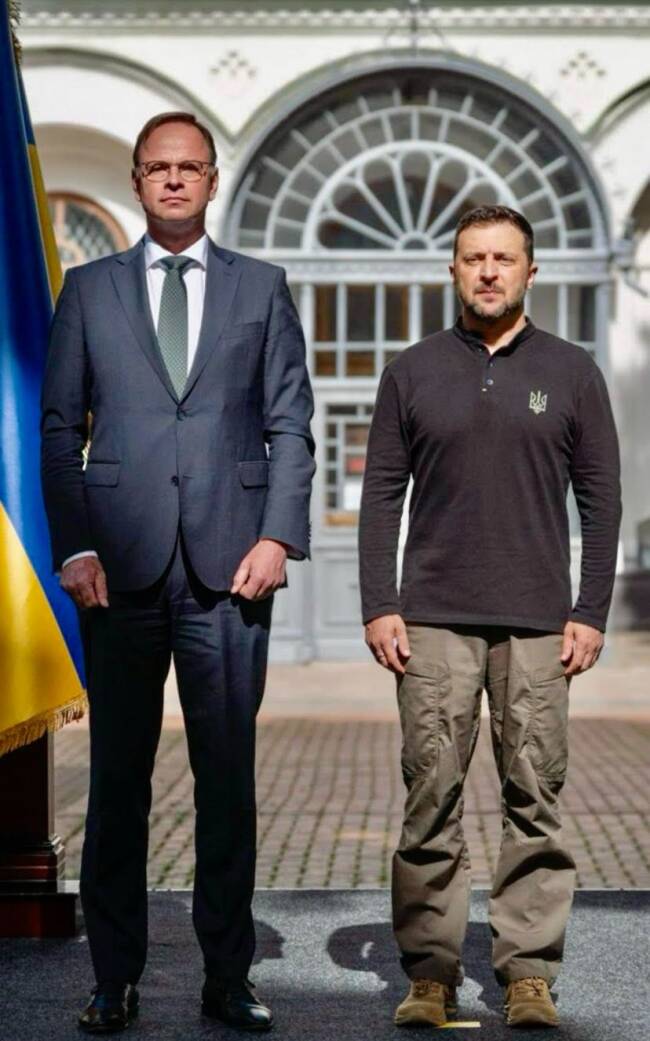
Dorhout studied Eastern European history in Groningen, before becoming the Dutch Representative at the United Nations in New York, master of ceremonies to King Willem-Alexander, and Director of Intelligence at the General Intelligence and Security Service (AIVD). In Kyiv, he manages a team of 30 Dutch and 20 Ukrainian colleagues. His team updates our government in The Hague about both the humanitarian and political situation in Ukraine, and the economic and military situation. And then there are the ‘external events’, such as visits from ministries or receptions for high-level visitors from the Netherlands. He spends six weeks working in Ukraine and returns to the Netherlands for two weeks to recharge his batteries, mainly by sleeping. He doesn’t get a lot of sleep in Kyiv.
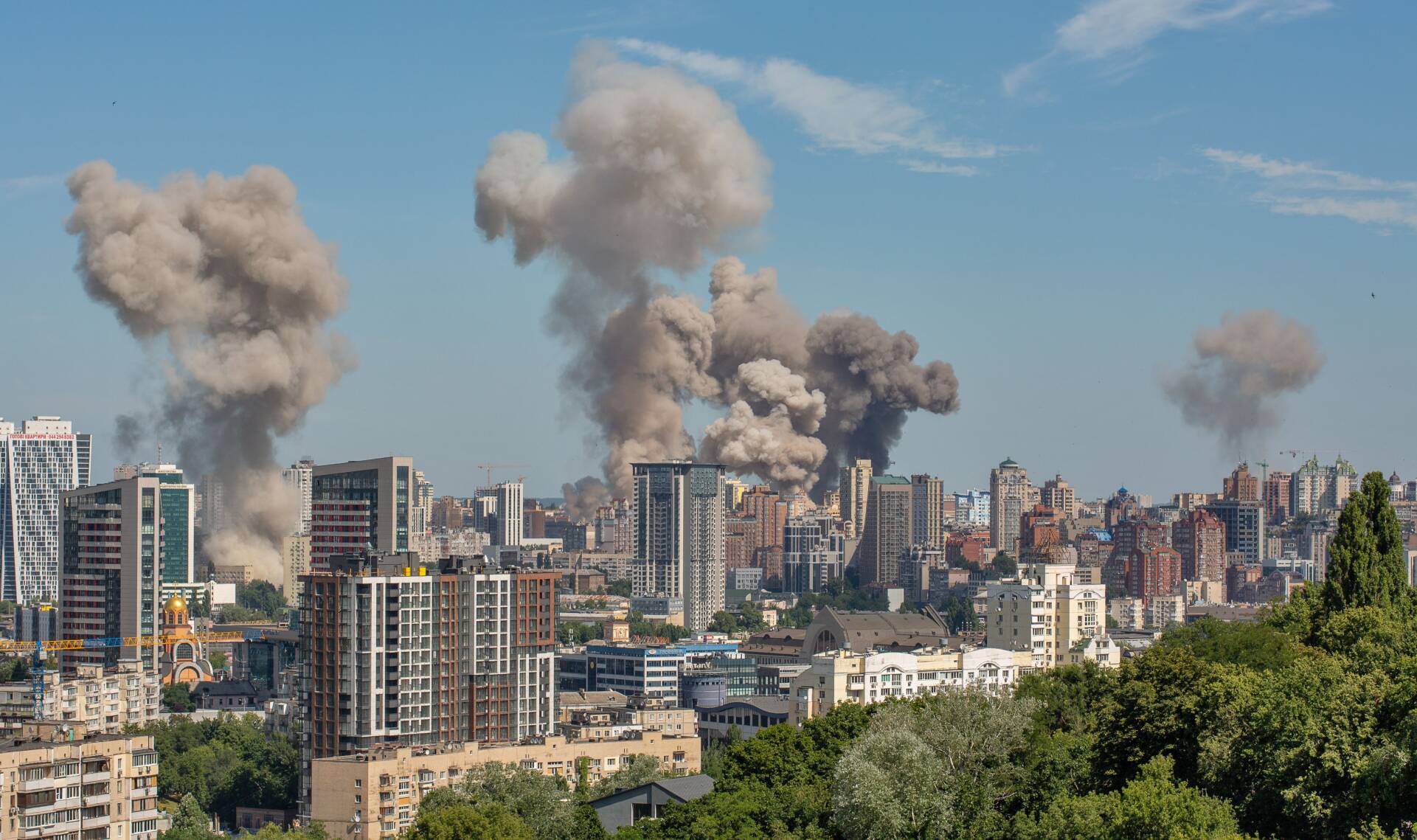
‘There are two parallel realities here,’ he explains. ‘The gruelling reality of the war, and the reality of Kyiv as an East-European city where the sun shines, people sit outside at pavement cafés, and the shops are open. I suppose it’s like the double head of Janus. You don’t notice the air raids during the day, because they are mainly at night.’ So Dorhout moved his bed into the air raid shelter under his house. ‘At least now I don’t have to get up and move every time the air raid sirens go off.’
How does he see the future of Ukraine? Dorhout: ‘I am convinced that the only way forward is to make Ukraine as strong as possible. The Netherlands is helping with this by providing all kinds of support. But as long as Russia refuses to change its objectives, I fear that the chance of long-term peace is still a long way off.’
n a Sunday afternoon, the daughter of Alle Dorhout (1966) made a call to Kyiv from her student city of Amsterdam. In tears. She’d read about Russia’s
PHOTO: SHUTTERSTOCK / SERGIY PALAMARCHUK
ALLE DORHOUT
O
student city of Amsterdam. In tears. She’d read about Russia’s invasion of Ukraine online. Almost 1,800 kilometres away, her father was picking blackcurrants to make jam. ‘It’s not all doom and gloom here,’ said Dorhout from his office in the Podil area to the north of the city centre, which overlooks the beautiful Pyrohoshcha church. ‘A lot of people only get their news about Ukraine via nos.nl or nu.nl. This gives a fairly one-sided impression of what’s going on.’
Don’t misunderstand him; Dorhout, who has been the Dutch ambassador in Ukraine for the past year, would be the last person to play down life in a country in the grips of war. ‘The war goes on 24/7 here. I sometimes talk to people who’ve been on the front line or in Russian prisoner-of-war camps; it’s harrowing. I recently shook hands with someone I was talking to, and thought: his hand feels a bit strange. It turned out that two of his fingers had been cut off.’
The contrast is alienating: Dorhout, who works in a relatively safe place in Kyiv, where there’s a good anti-aircraft system, is talking about the devastating impact of Russian aggression. About cruise missiles that sometimes skim his house. About meeting displaced Ukrainians who have fled occupied areas in search of safety in the West. About Ukrainian colleagues whose families and friends are affected by the war. ‘I don’t actively have to deal with all these problems, but I come across them on a daily basis. I definitely have a much easier life than these people: at least I can go for a walk at the weekend, assuming things are relatively calm and no visits have been planned.’
Dorhout studied Eastern European history in Groningen, before becoming the Dutch Representative at the United Nations in New York, master of ceremonies to King Willem-Alexander, and Director of Intelligence at the General Intelligence and Security Service (AIVD). In Kyiv, he manages a team of 30 Dutch and 20 Ukrainian colleagues. His team updates our government in The Hague about both the humanitarian and political situation in Ukraine, and the economic and military situation. And then there are the ‘external events’, such as visits from ministries or receptions for high-level visitors from the Netherlands. He spends six weeks working in Ukraine and returns to the Netherlands for two weeks to recharge his batteries, mainly by sleeping. He doesn’t get a lot of sleep in Kyiv.
‘There are two parallel realities here,’ he explains. ‘The gruelling reality of the war, and the reality of Kyiv as an East-European city where the sun shines, people sit outside at pavement cafés, and the shops are open. I suppose it’s like the double head of Janus. You don’t notice the air raids during the day, because they are mainly at night.’ So Dorhout moved his bed into the air raid shelter under his house. ‘At least now I don’t have to get up and move every time the air raid sirens go off.’
How does he see the future of Ukraine? Dorhout: ‘I am convinced that the only way forward is to make Ukraine as strong as possible. The Netherlands is helping with this by providing all kinds of support. But as long as Russia refuses to change its objectives, I fear that the chance of long-term peace is still a long way off.’
n a Sunday afternoon, the daughter of Alle Dorhout (1966) made a call to Kyiv from her
UKRAINE
TEXT: LIEKE VAN DEN KROMMENACKER
KYIV