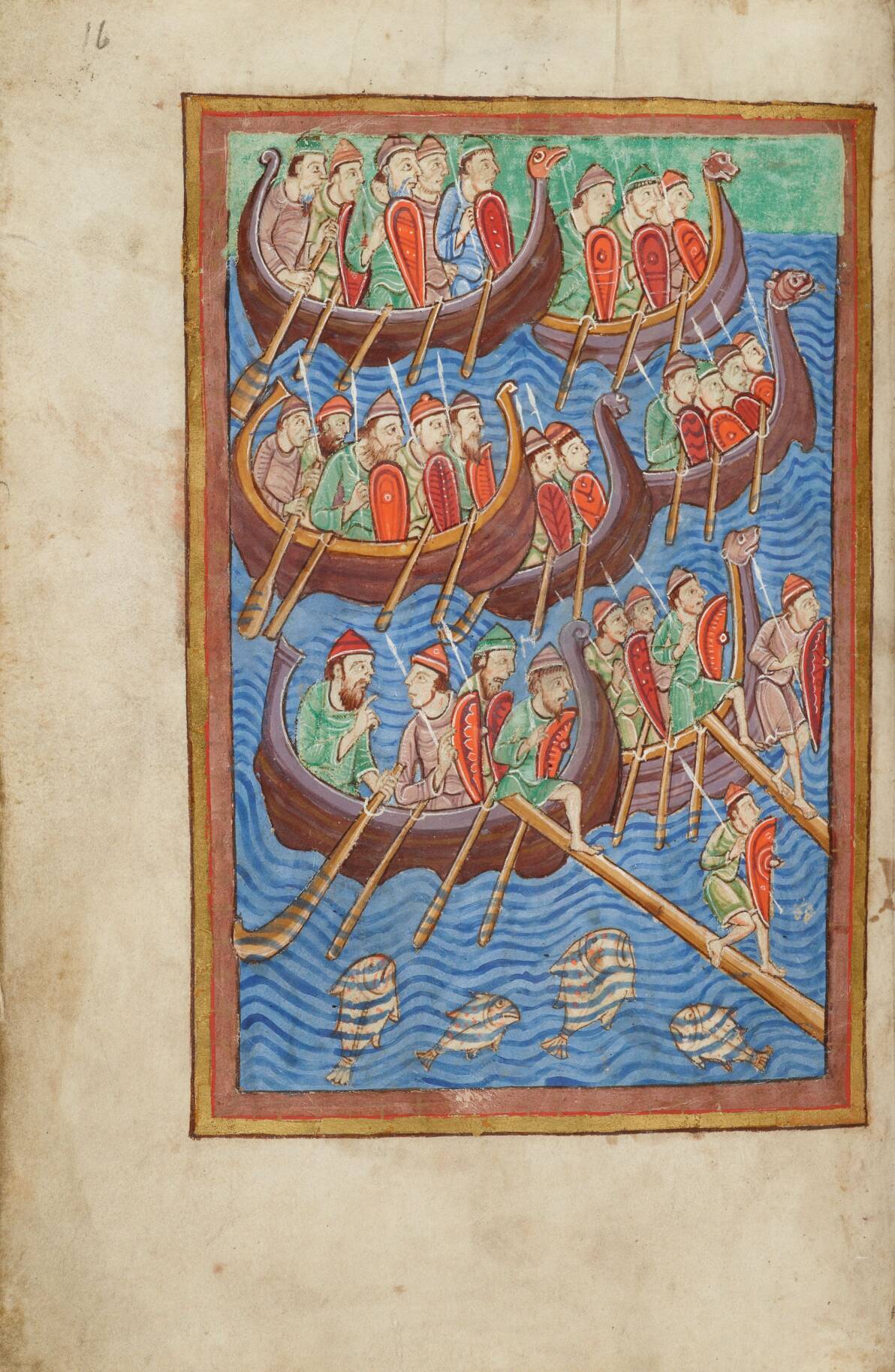
Landing of the Danes, ca. 1130, Miscellany on the life of St. Edmund, Morgan Library & Museum, MS M.736
Vikings


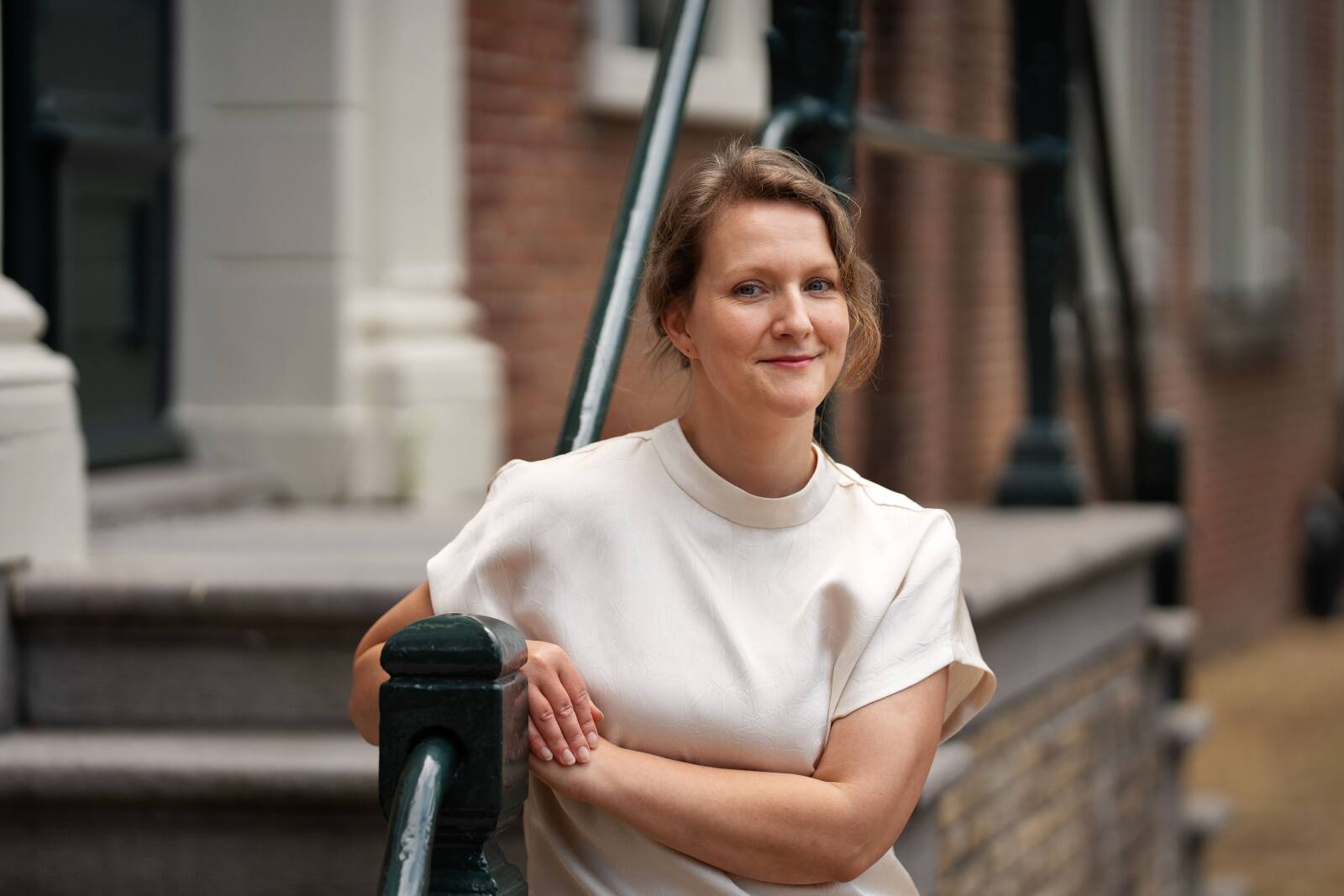
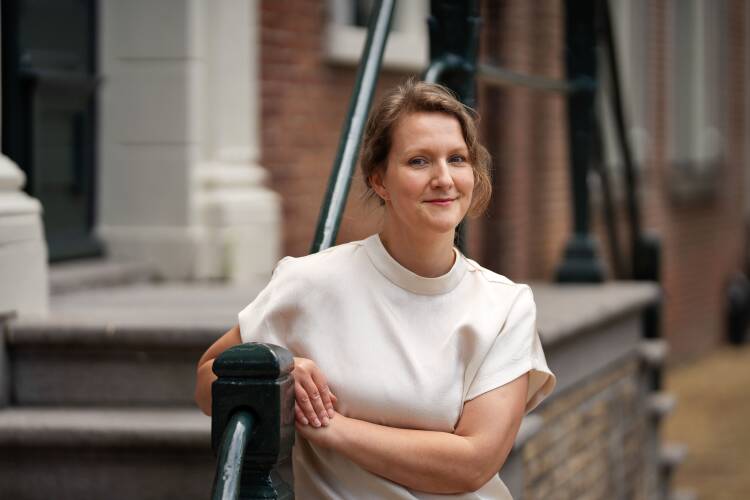
Nelleke IJssennagger-van der Pluijm (1986) has been Managing Director with a research task at the Fryske Akademy since March 2021 and Professor by special appointment of Cultural History of the southern North Sea Region in the Early Middle Ages and Viking Age at the University of Groningen since January 2025. The chair was established by the Fryske Akademy. Before that she was Regional Curator in Cornwall at the National Trust in England and Curator of Mound Culture and Middle Ages at the Fries Museum. IJssennagger-van der Pluijm studied Scandinavian Studies, Archaeology and Old Germanic Studies and completed the research master’s programme in Classical Medieval and Renaissance Studies at the UG. In 2017, she was awarded her PhD in Groningen for her thesis Central because Liminal. Frisia in a Viking Age North Sea World. She is a Fellow of the Society of Antiquities of London (FSA).
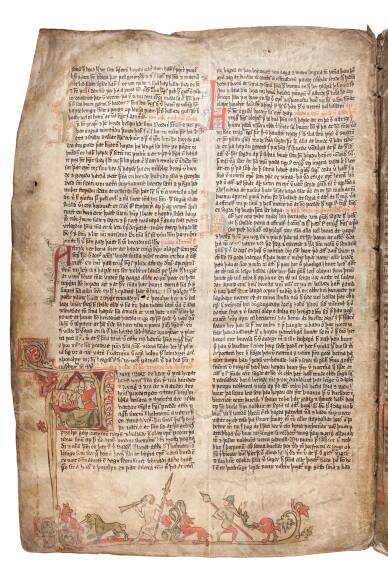
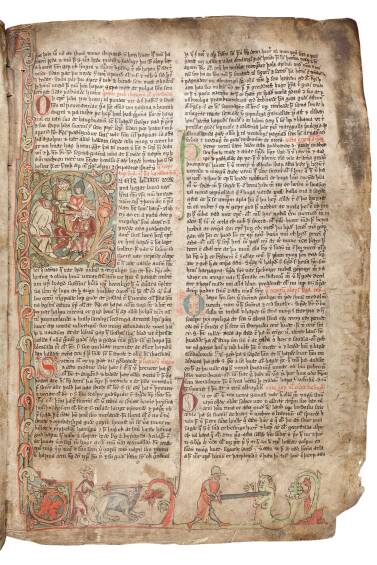
Flateyjarbók (Codex Flateyensis, ca. 1387-1394, GKS 1005 fol
PROPOSITION
Athra Malki – Faculteit Medische Wetenschappen
It’s not the load that breaks you down; it’s the way you carry it. (Lou Holtz)
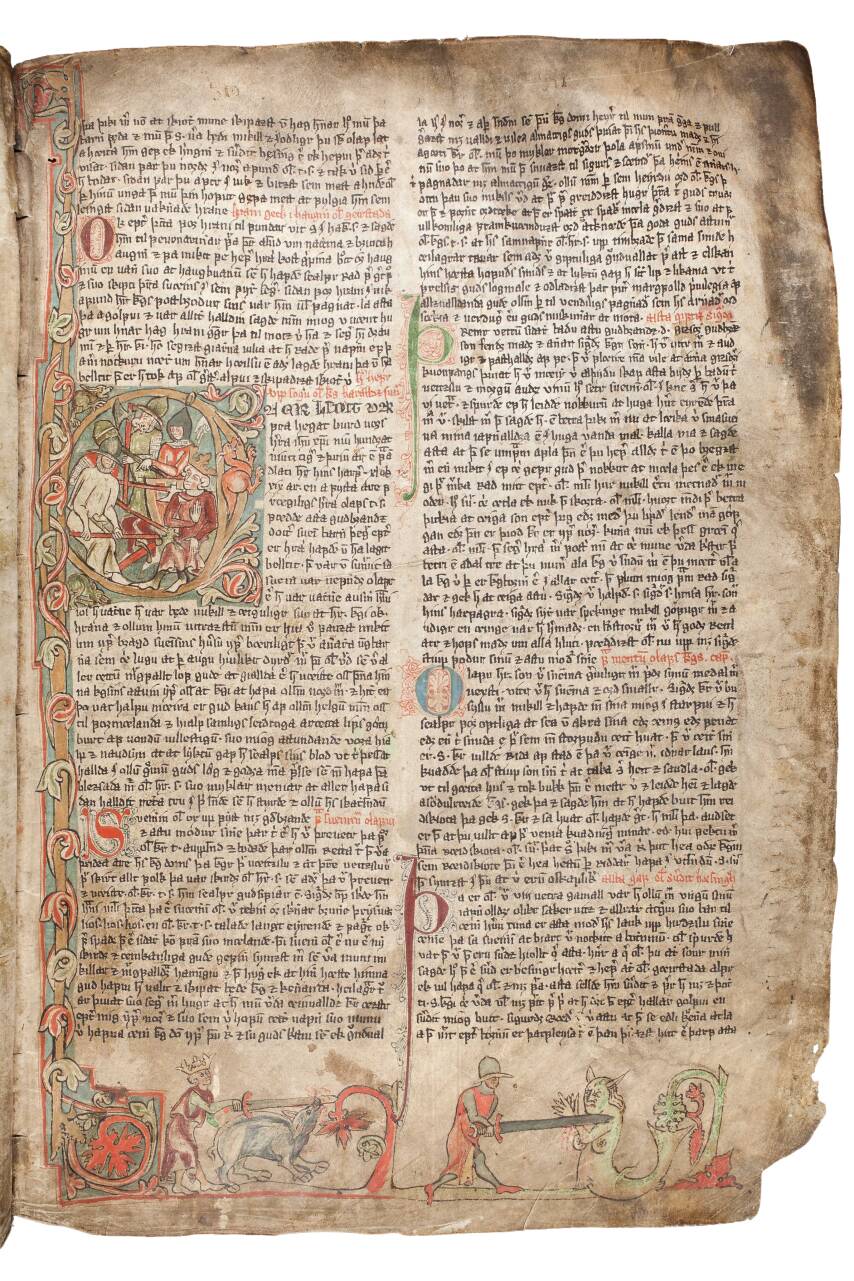
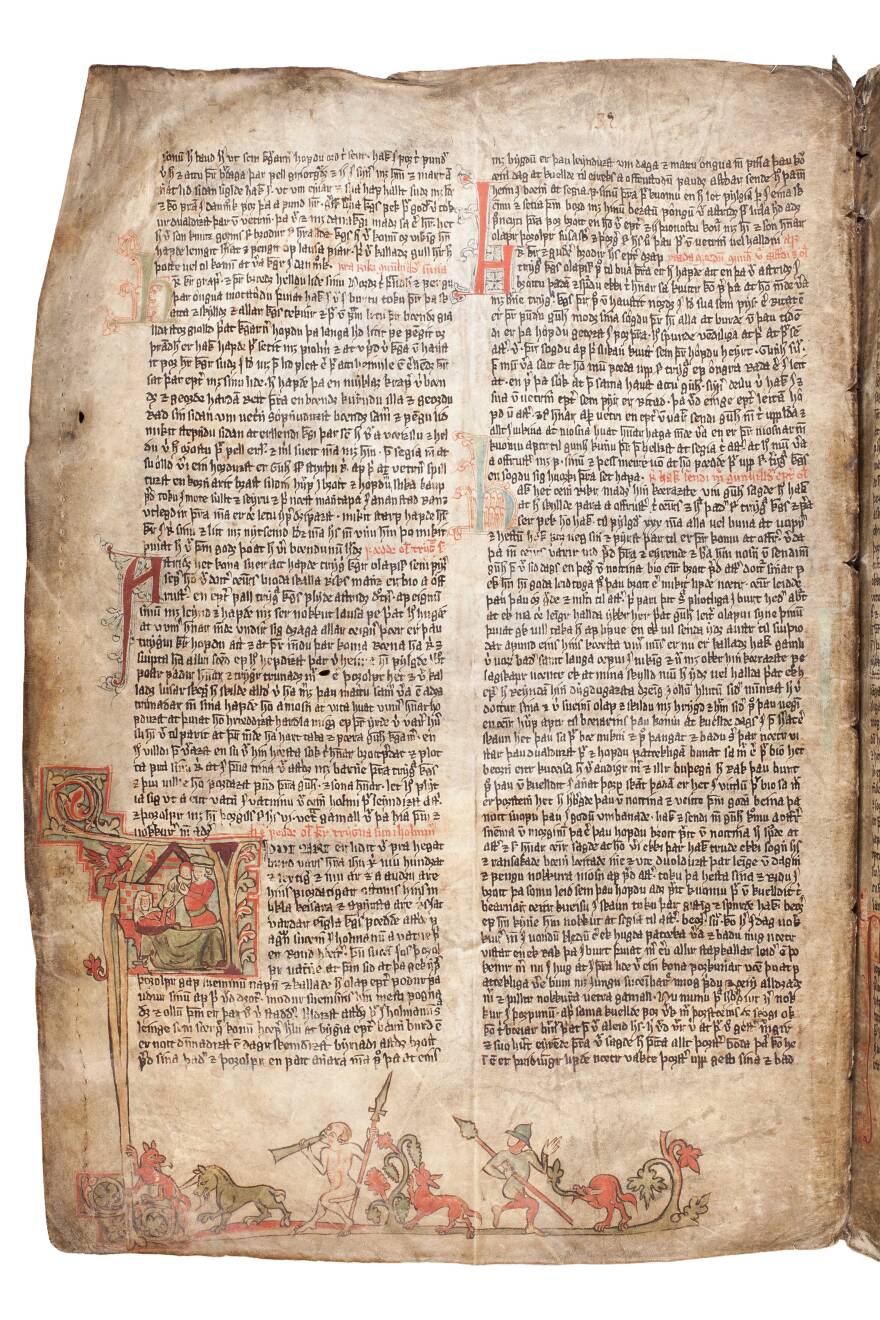
PHOTO: JEROEN VAN KOOTEN
T
“
‘For me, the most important thing is to show that cultures and histories are never as black and white as we often present them.’
TEXT: LIEKE VAN DEN KROMMENACKER
The Vikings were far more than the fierce, plundering seafarers we often imagine them to be, as Nelleke IJssennagger-Van der Pluijm’s research reveals. Hygiene and poetry, for example, were highly valued in their culture. ‘We still do not understand the remnants of the Viking world well enough because we tend to see the sea as a barrier.’
Layered and complex
Since Viking poetry is highly cryptic and had to adhere to strict rules regarding rhyme and metre, it is almost impossible to decipher without assistance. One of the people who dedicated themselves to inventorying and recording most of the sagas - and thus the poems - was Snorri Sturluson. ‘His work is very important for our understanding of these stories,’ emphasizes IJssennagger-Van der Pluijm.
Sturluson not only translated but also provided extensive explanations for so-called ‘kenningar’: a complex form of metaphor used by the Vikings. For example, a ship was not simply called a ‘ship’ but a ‘horse of the waves’. When they referred to ‘horn-flood’, they meant ‘drink’. ‘Yeast-Rhine’ meant beer, with a reference to the Rhine River. But when they spoke of ‘wine’, they described it as ‘the destroyer of dignity’.
The sagas, with their poetic nature, form only a small part of her research, but according to IJssennagger-Van der Pluijm, they are a fine example of the layered and complex nature of the Viking world. ‘For me, the most important thing is to show that cultures and histories are never as black and white as we often present them. And that they have a much greater impact than we think. I hope that, through my chair, I can inspire a new generation of researchers.’
Establishing a foothold
The Viking Age is the period roughly between 800 and 1100 AD. ‘My chair focuses on the question of what exactly happened during that time and in the lead-up to it between the various coasts around the North Sea, particularly Frisia,’ explains IJssennagger-Van der Pluijm. ‘On the one hand, people during that period were very similar to how we are today. On the other hand, it was a completely different world with entirely different standards.’
The word Viking actually means someone who goes on an expedition to gather power, fame, or wealth, says IJssennagger-Van der Pluijm. ‘Often, it was a matter of establishing a foothold somewhere so that you could collect taxes or gain political power.’ Much was permitted in this pursuit: plundering, murder, rape, and slavery. ‘There was a great deal of adventure, but also a great deal of violence. However, this was not exclusive to the Vikings. It was the time of the Frankish Empire and the centralization of power. On the continent, as the mainland of Europe was called, this also involved violence and religious pressure.’
To truly understand what it meant to be a Viking, it is equally important to know what a Viking was not. IJssennagger-Van der Pluijm explains: ‘It is not an ethnic term. So, it is not a tribe or a people. Initially, the term was linked to the activity: going on a Viking expedition, an overseas adventure.’ Someone could be a Viking while travelling and a farmer at home during the season when they were not on a Viking expedition. And although Viking culture originated in Scandinavia, people from the Baltic States, England, or the Frisian coastal region may also have identified themselves as Vikings at times.
The sea as a connector
Through her research, IJssennagger-Van der Pluijm aims to gain a better understanding of what she calls ‘intercoastal dynamics’: the interconnectedness between the various North Sea coasts during that time. ‘You can see that the connections across the sea had a major influence on cultural developments. The truth is, we still do not fully understand the remnants of the Viking world because we tend to think within national borders and see the sea as a barrier. However, at that time, it was the exact opposite: the sea was the most important connector. People on the coast shared much more with each other and had far more contact with people on other coasts than with those inland.’
As a result, Vikings sometimes spent long periods in other coastal areas, leading to vibrant trade and cultural exchange. The effects of this are still visible today, for example in current language use. Words such as window, give, take, and egg derive from Old Norse. ‘The Vikings brought these words to England.’
The Vikings’ appreciation for language is also evident in the surviving sagas: stories told by the Vikings themselves, later recorded in parchment manuscripts. These stories contain not only mythological elements and accounts of their activities but also a great deal of poetry. ‘These poems were often part of the ongoing narrative,’ says IJssennagger-Van der Pluijm. ‘What you often see are eulogies for the king or other rulers.’ In this way, Vikings tried to win their favour. ‘When you travel, you are always dependent on the hospitality and safety of the people and places you visit. So, if you were travelling to a certain court to stay there for a while, it could help to write a beautiful poem for the king.’
also been found in the Frisian coastal region. This shows that our coastal area was connected to the Viking world.’
A fresh-smelling, well-combed, and eloquent Viking is quite a different image from the prevailing one of the wild and merciless warrior who spent their life plundering. They did that too, but that is far from the whole story, as IJssennagger-Van der Pluijm knows. She researches the world of these notorious seafarers and their relationship with regions such as the coastal area we call Frisia. The prevailing image of the Vikings deserves deeper exploration. ‘The Vikings made such an impact on history, from Scandinavia to North America and Constantinople. They had their own cultural and literary traditions, which were part of a much larger North Sea culture, to which our coastal region also belonged.’
IJssennagger-Van der Pluijm, who is affiliated with the University of Groningen and the Fryske Akademy, holds the only chair in the Netherlands dedicated to the Viking Age and the Vikings. Officially, since 1 January 2025, she has been a part-time professor of Cultural History of the Southern North Sea Region in the Early Middle Ages and the Viking Age. In this role, she studies archaeological finds, Viking literature, the landscape, and the oral traditions of that time, which were later recorded in writing.
he Vikings bathed on a fixed day each week. ‘Many people do not realize this, but they paid a great deal of attention to their appearance and hygiene,’ says Nelleke IJssennagger-Van der Pluijm (1986). ‘Most people carried a comb, often made from antler. Many such combs have
Landing of the Danes, ca. 1130, Miscellany on the life of St. Edmund, Morgan Library & Museum, MS M.736
on the
Vikings
PROPOSITION
Athra Malki – Faculteit Medische Wetenschappen
It’s not the load that breaks you down; it’s the way you carry it. (Lou Holtz)
PHOTO: JEROEN VAN KOOTEN
Layered and complex
Since Viking poetry is highly cryptic and had to adhere to strict rules regarding rhyme and metre, it is almost impossible to decipher without assistance. One of the people who dedicated themselves to inventorying and recording most of the sagas - and thus the poems - was Snorri Sturluson. ‘His work is very important for our understanding of these stories,’ emphasizes IJssennagger-Van der Pluijm.
Sturluson not only translated but also provided extensive explanations for so-called ‘kenningar’: a complex form of metaphor used by the Vikings. For example, a ship was not simply called a ‘ship’ but a ‘horse of the waves’. When they referred to ‘horn-flood’, they meant ‘drink’. ‘Yeast-Rhine’ meant beer, with a reference to the Rhine River. But when they spoke of ‘wine’, they described it as ‘the destroyer of dignity’.
The sagas, with their poetic nature, form only a small part of her research, but according to IJssennagger-Van der Pluijm, they are a fine example of the layered and complex nature of the Viking world. ‘For me, the most important thing is to show that cultures and histories are never as black and white as we often present them. And that they have a much greater impact than we think. I hope that, through my chair, I can inspire a new generation of researchers.’
Flateyjarbók (Codex Flateyensis, ca. 1387-1394, GKS 1005 fol
Establishing a foothold
The Viking Age is the period roughly between 800 and 1100 AD. ‘My chair focuses on the question of what exactly happened during that time and in the lead-up to it between the various coasts around the North Sea, particularly Frisia,’ explains IJssennagger-Van der Pluijm. ‘On the one hand, people during that period were very similar to how we are today. On the other hand, it was a completely different world with entirely different standards.’
The word Viking actually means someone who goes on an expedition to gather power, fame, or wealth, says IJssennagger-Van der Pluijm. ‘Often, it was a matter of establishing a foothold somewhere so that you could collect taxes or gain political power.’ Much was permitted in this pursuit: plundering, murder, rape, and slavery. ‘There was a great deal of adventure, but also a great deal of violence. However, this was not exclusive to the Vikings. It was the time of the Frankish Empire and the centralization of power. On the continent, as the mainland of Europe was called, this also involved violence and religious pressure.’
To truly understand what it meant to be a Viking, it is equally important to know what a Viking was not. IJssennagger-Van der Pluijm explains: ‘It is not an ethnic term. So, it is not a tribe or a people. Initially, the term was linked to the activity: going on a Viking expedition, an overseas adventure.’ Someone could be a Viking while travelling and a farmer at home during the season when they were not on a Viking expedition. And although Viking culture originated in Scandinavia, people from the Baltic States, England, or the Frisian coastal region may also have identified themselves as Vikings at times.
The sea as a connector
Through her research, IJssennagger-Van der Pluijm aims to gain a better understanding of what she calls ‘intercoastal dynamics’: the interconnectedness between the various North Sea coasts during that time. ‘You can see that the connections across the sea had a major influence on cultural developments. The truth is, we still do not fully understand the remnants of the Viking world because we tend to think within national borders and see the sea as a barrier. However, at that time, it was the exact opposite: the sea was the most important connector. People on the coast shared much more with each other and had far more contact with people on other coasts than with those inland.’
As a result, Vikings sometimes spent long periods in other coastal areas, leading to vibrant trade and cultural exchange. The effects of this are still visible today, for example in current language use. Words such as window, give, take, and egg derive from Old Norse. ‘The Vikings brought these words to England.’
The Vikings’ appreciation for language is also evident in the surviving sagas: stories told by the Vikings themselves, later recorded in parchment manuscripts. These stories contain not only mythological elements and accounts of their activities but also a great deal of poetry. ‘These poems were often part of the ongoing narrative,’ says IJssennagger-Van der Pluijm. ‘What you often see are eulogies for the king or other rulers.’ In this way, Vikings tried to win their favour. ‘When you travel, you are always dependent on the hospitality and safety of the people and places you visit. So, if you were travelling to a certain court to stay there for a while, it could help to write a beautiful poem for the king.’
“
‘For me, the most important
thing is to show that cultures
and histories are never as
black and white as we often present them.’
Nelleke IJssennagger-van der Pluijm (1986) has been Managing Director with a research task at the Fryske Akademy since March 2021 and Professor by special appointment of Cultural History of the southern North Sea Region in the Early Middle Ages and Viking Age at the University of Groningen since January 2025. The chair was established by the Fryske Akademy. Before that she was Regional Curator in Cornwall at the National Trust in England and Curator of Mound Culture and Middle Ages at the Fries Museum. IJssennagger-van der Pluijm studied Scandinavian Studies, Archaeology and Old Germanic Studies and completed the research master’s programme in Classical Medieval and Renaissance Studies at the UG. In 2017, she was awarded her PhD in Groningen for her thesis Central because Liminal. Frisia in a Viking Age North Sea World. She is a Fellow of the Society of Antiquities of London (FSA).
deal of attention to their appearance and hygiene,’ says Nelleke IJssennagger-Van der Pluijm (1986). ‘Most people carried a comb, often made from antler. Many such combs have also been found in the Frisian coastal region. This shows that our coastal area was connected to the Viking world.’
A fresh-smelling, well-combed, and eloquent Viking is quite a different image from the prevailing one of the wild and merciless warrior who spent their life plundering. They did that too, but that is far from the whole story, as IJssennagger-Van der Pluijm knows. She researches the world of these notorious seafarers and their relationship with regions such as the coastal area we call Frisia. The prevailing image of the Vikings deserves deeper exploration. ‘The Vikings made such an impact on history, from Scandinavia to North America and Constantinople. They had their own cultural and literary traditions, which were part of a much larger North Sea culture, to which our coastal region also belonged.’
IJssennagger-Van der Pluijm, who is affiliated with the University of Groningen and the Fryske Akademy, holds the only chair in the Netherlands dedicated to the Viking Age and the Vikings. Officially, since 1 January 2025, she has been a part-time professor of Cultural History of the Southern North Sea Region in the Early Middle Ages and the Viking Age. In this role, she studies archaeological finds, Viking literature, the landscape, and the oral traditions of that time, which were later recorded in writing.
he Vikings bathed on a fixed day each week. ‘Many people do not realize this, but they paid a great
T
The Vikings were far more than the fierce, plundering seafarers we often imagine them to be, as Nelleke IJssennagger-Van der Pluijm’s research reveals. Hygiene and poetry, for example, were highly valued in their culture. ‘We still do not understand the remnants of the Viking world well enough because we tend to see the sea as a barrier.’
FOTO: SIESE VEENSTRA
TEXT: LIEKE VAN DEN KROMMENACKER