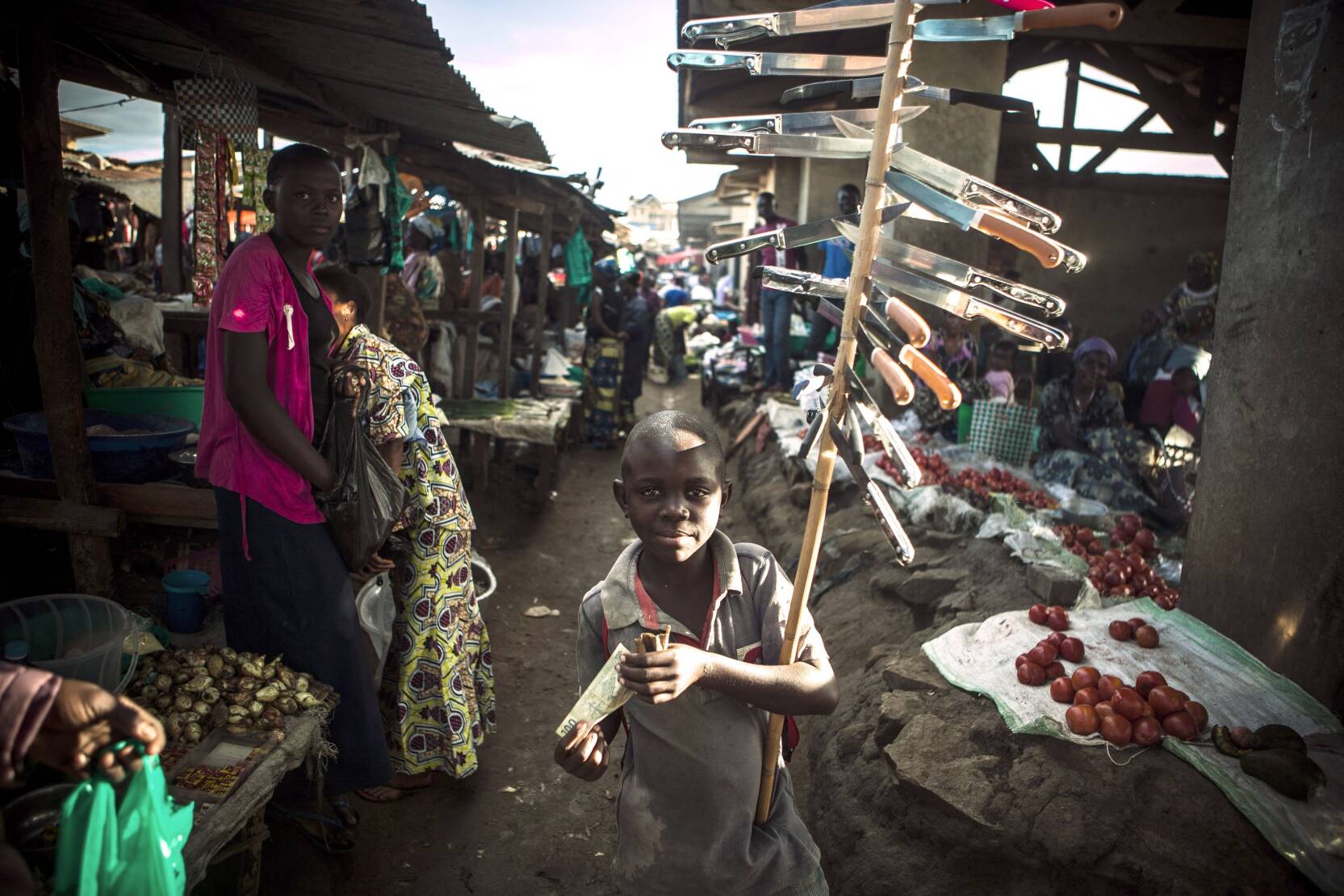
PHOTO: EDUARDO SOTERAS / ANP
MAËL HANON


T
World Cup football
The DRC is a vast, fertile country rich in natural resources, such as uranium, diamonds, and lithium, and boasts stunning natural landscapes, including the second-largest tropical rainforest in the world. Hanon is impressed by the many cultures and languages that converge there and recalls the joy when the DRC qualified for the FIFA World Cup for the first time in 52 years and nearly defeated England. ‘Unfortunately, the problems here are immense. The country is deeply scarred by the violence of the colonial era and has suffered from conflicts and instability for decades since decolonization. Numerous armed groups are involved in these conflicts. The impact on the civilian population is staggering—not only because of the deaths during these conflicts but also due to other direct consequences, such as violence, abuse, food insecurity, unexploded ordnance left in the ground, and the difficulties in combating diseases like malaria, cholera, and measles.’
And then there is the current Ebola outbreak, which is spreading rapidly. Hanon explains: ‘The conflicts make the situation extremely complex: it is often very difficult to access areas where Ebola is present. People flee from the virus, which only accelerates its spread. One of the issues is that people often bring their relatives to Ebola treatment centres too late. You usually only find out you have Ebola when bleeding starts. The DRC Red Cross then helps organize dignified burials, but entirely in protective Ebola gear. People are not allowed to touch or wash the bodies of their deceased loved ones, as the risk of infection is extremely high. The protocols to contain the outbreak sometimes clash with cultural traditions. Unfortunately, there have already been several violent incidents against humanitarian workers, including volunteers from the DRC Red Cross.’
A laugh and good humour
Working in a country with so many major problems is challenging, and Hanon sometimes struggles to see the light at the end of the tunnel. ‘These conflicts have been going on for so long, and the Ebola outbreak makes everything even more worrying. We do our best to improve the protection of the civilian population by continuing dialogue with the parties involved in the conflicts, but it remains to be seen whether a sustainable solution will emerge. This requires a great deal of patience and adaptability. It’s exhausting, but I believe that a laugh and good humour are still the best remedies for the chaos around you. I hope this will succeed someday. If we can’t keep hope alive, who can? At the same time, I realize that I will eventually go home, while all my local colleagues will stay here and raise their children in these circumstances, with all the risks that entails. That is difficult. And painful. That’s why I want to keep believing, sometimes against all odds.’
Gyas
His time in Groningen is long behind him, but he has fond memories of the city. ‘Groningen was an open door to the rest of the world for me. I made many dear friendships there. And I rowed passionately with Gyas: training six, seven, eight times a week, rain or shine. I think that experience helped me build a certain discipline and team spirit that I still benefit from greatly in my current work.’
via video call. ‘This is already the seventeenth Ebola outbreak in the country, and this one is particularly severe and spreading rapidly – much faster than in previous cases. Right now, all efforts are focused on breaking the chain of transmission. At the same time, local humanitarian workers, including the DRC Red Cross, are working to ensure safe and dignified burials, educate communities, and provide psychosocial support to patients and their families. There isn’t much more they can do, as there is still no vaccine for this Bundibugyo Ebola variant.’
Confidentiality
Maël Hanon was born in France, grew up in the Netherlands, completed a Bachelor’s degree in International Relations in Groningen, and earned a Master’s degree in Sweden. He has volunteered in refugee camps on Lesbos, worked for War Child in Sweden and Colombia, and served with the Dutch Red Cross in Mali. In the DRC, the Ebola outbreak also complicates his own work, although he is not directly involved in combating the epidemic.
‘The ICRC has the mandate to protect and assist people affected by armed conflicts and other situations of violence. This means we engage in dialogue with all parties involved in the conflicts active in the country - and there are many - to help those who are not, or are no longer, participating in hostilities. This includes efforts to prevent sexual violence, protect children, and maintain family ties. We also support prison authorities in improving humanitarian conditions in detention centres. We operate in strict confidentiality: nothing we discuss with the various parties in conflict zones is disclosed publicly or to third parties. We must remain neutral to carry out our work. Additionally, we strive to ensure that healthcare facilities remain operational and work on food security and access to drinking water.’
he alumnus of International Relations works for the International Committee of the Red Cross (ICRC) in Bunia, a city in the eastern Democratic Republic of the Congo (DRC), near the epicentre of the current Ebola outbreak. ‘The outbreak started in a place very close to here,’ Hanon explains
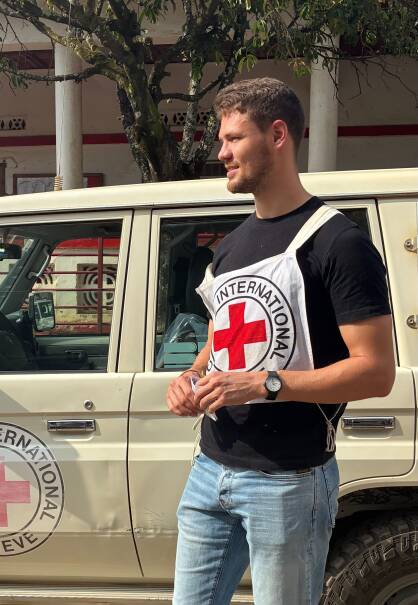
Maël Hanon (1998) completed a Bachelor’s degree in International Relations and International Organisations at the University of Groningen (2019) and subsequently a Master’s in Social Science, Peace and Conflict Studies at Uppsala University (2022). Among other things, he volunteered in the refugee camps on Lesbos in Greece, worked for War Child in Sweden and Colombia, and subsequently for the Dutch Red Cross in Mali. He is currently working for the International Committee of the Red Cross (ICRC) in Bunia, in the Democratic Republic of the Congo, as a Protection Delegate.
Gianni Pacella – Faculteit Science & Engineering
Being allowed to explore a seemingly silly idea is often the first step toward meaningful research.
PROPOSITION
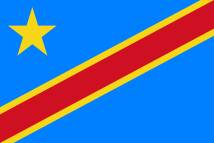
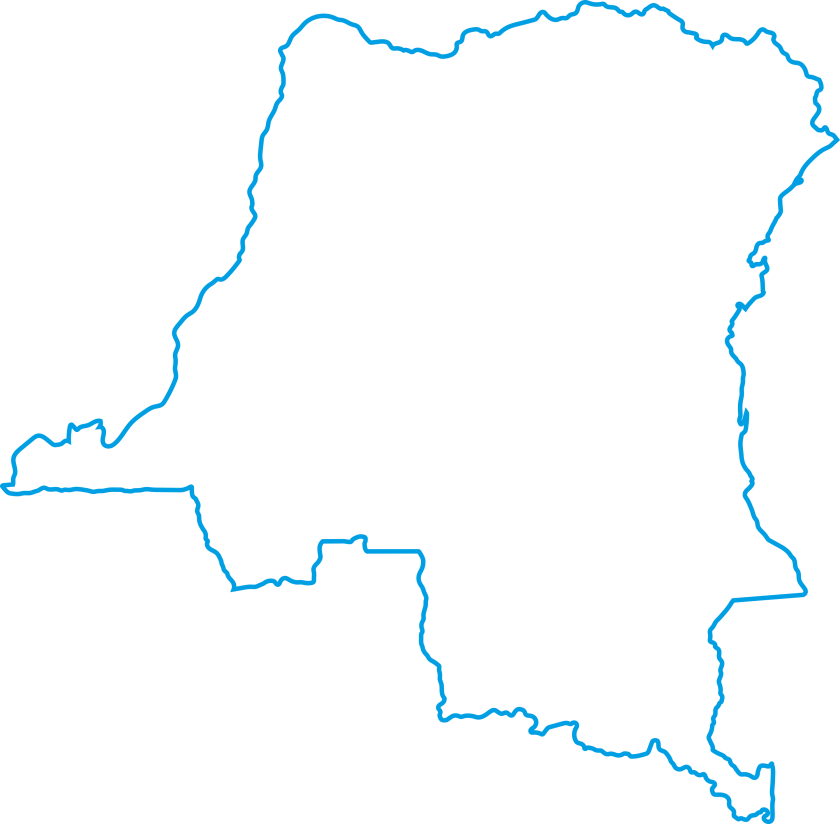
BUNIA
DEMOCRATIC REPUBLIC OF THE CONGO
Maël Hanon knew from a young age that his future lay in humanitarian work.
‘My parents met in Ethiopia, where they both worked for Médecins Sans Frontières,
and they inspired me to choose this path.’
“
‘Groningen was an open door to the rest of the world for me ’
TEXT: MARJAN BROUWERS
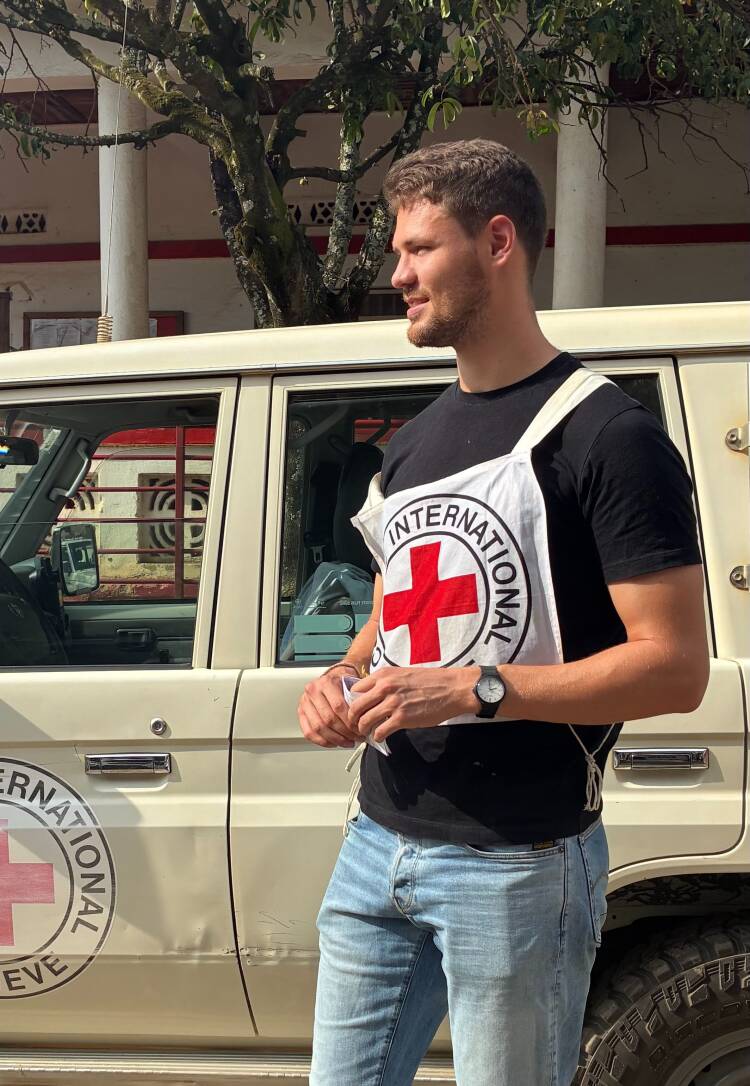
PHOTO: EDUARDO SOTERAS / ANP
MAËL HANON
Gianni Pacella – Faculteit Science & Engineering
Being allowed to explore a seemingly silly idea is often the first step toward meaningful research.
PROPOSITION
Maël Hanon (1998) completed a Bachelor’s degree in International Relations and International Organisations at the University of Groningen (2019) and subsequently a Master’s in Social Science, Peace and Conflict Studies at Uppsala University (2022). Among other things, he volunteered in the refugee camps on Lesbos in Greece, worked for War Child in Sweden and Colombia, and subsequently for the Dutch Red Cross in Mali. He is currently working for the International Committee of the Red Cross (ICRC) in Bunia, in the Democratic Republic of the Congo, as a Protection Delegate.
World Cup football
The DRC is a vast, fertile country rich in natural resources, such as uranium, diamonds, and lithium, and boasts stunning natural landscapes, including the second-largest tropical rainforest in the world. Hanon is impressed by the many cultures and languages that converge there and recalls the joy when the DRC qualified for the FIFA World Cup for the first time in 52 years and nearly defeated England. ‘Unfortunately, the problems here are immense. The country is deeply scarred by the violence of the colonial era and has suffered from conflicts and instability for decades since decolonization. Numerous armed groups are involved in these conflicts. The impact on the civilian population is staggering – not only because of the deaths during these conflicts but also due to other direct consequences, such as violence, abuse, food insecurity, unexploded ordnance left in the ground, and the difficulties in combating diseases like malaria, cholera, and measles.’
And then there is the current Ebola outbreak, which is spreading rapidly. Hanon explains: ‘The conflicts make the situation extremely complex: it is often very difficult to access areas where Ebola is present. People flee from the virus, which only accelerates its spread. One of the issues is that people often bring their relatives to Ebola treatment centres too late. You usually only find out you have Ebola when bleeding starts. The DRC Red Cross then helps organize dignified burials, but entirely in protective Ebola gear. People are not allowed to touch or wash the bodies of their deceased loved ones, as the risk of infection is extremely high. The protocols to contain the outbreak sometimes clash with cultural traditions. Unfortunately, there have already been several violent incidents against humanitarian workers, including volunteers from the DRC Red Cross.’
A laugh and good humour
Working in a country with so many major problems is challenging, and Hanon sometimes struggles to see the light at the end of the tunnel. ‘These conflicts have been going on for so long, and the Ebola outbreak makes everything even more worrying. We do our best to improve the protection of the civilian population by continuing dialogue with the parties involved in the conflicts, but it remains to be seen whether a sustainable solution will emerge. This requires a great deal of patience and adaptability. It’s exhausting, but I believe that a laugh and good humour are still the best remedies for the chaos around you. I hope this will succeed someday. If we can’t keep hope alive, who can? At the same time, I realize that I will eventually go home, while all my local colleagues will stay here and raise their children in these circumstances, with all the risks that entails. That is difficult. And painful. That’s why I want to keep believing, sometimes against all odds.’
Gyas
His time in Groningen is long behind him, but he has fond memories of the city. ‘Groningen was an open door to the rest of the world for me. I made many dear friendships there. And I rowed passionately with Gyas: training six, seven, eight times a week, rain or shine.
I think that experience helped me build a certain discipline and team spirit that I still benefit from greatly in my current work.’
Red Cross (ICRC) in Bunia, a city in the eastern Democratic Republic of the Congo (DRC), near the epicentre of the current Ebola outbreak. ‘The outbreak started in a place very close to here,’ Hanon explains via video call. ‘This is already the seventeenth Ebola outbreak in the country, and this one is particularly severe and spreading rapidly – much faster than in previous cases. Right now, all efforts are focused on breaking the chain of transmission. At the same time, local humanitarian workers, including the DRC Red Cross, are working to ensure safe and dignified burials, educate communities, and provide psychosocial support to patients and their families. There isn’t much more they can do, as there is still no vaccine for this Bundibugyo Ebola variant.’
Confidentiality
Maël Hanon was born in France, grew up in the Netherlands, completed a Bachelor’s degree in International Relations in Groningen, and earned a Master’s degree in Sweden. He has volunteered in refugee camps on Lesbos, worked for War Child in Sweden and Colombia, and served with the Dutch Red Cross in Mali. In the DRC, the Ebola outbreak also complicates his own work, although he is not directly involved in combating the epidemic.
‘The ICRC has the mandate to protect and assist people affected by armed conflicts and other situations of violence. This means we engage in dialogue with all parties involved in the conflicts active in the country - and there are many - to help those who are not, or are no longer, participating in hostilities. This includes efforts to prevent sexual violence, protect children, and maintain family ties. We also support prison authorities in improving humanitarian conditions in detention centres. We operate in strict confidentiality: nothing we discuss with the various parties in conflict zones is disclosed publicly or to third parties. We must remain neutral to carry out our work. Additionally, we strive to ensure that healthcare facilities remain operational and work on food security and access to drinking water.’
he alumnus of International Relations works for the International Committee of the
T
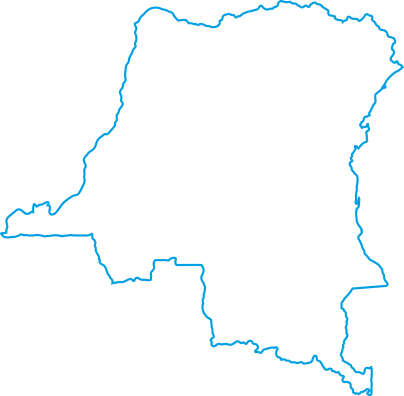
DEMOCRATIC
REPUBLIC OF
THE CONGO
BUNIA
“
‘Groningen was an open door to the rest of the world for me ’
Maël Hanon knew from a young age that his future lay in humanitarian work. ‘My parents met in Ethiopia, where they both worked for Médecins Sans Frontières, and they inspired me to choose this path.’
TEXT: MARJAN BROUWERS