


you never stop learning’
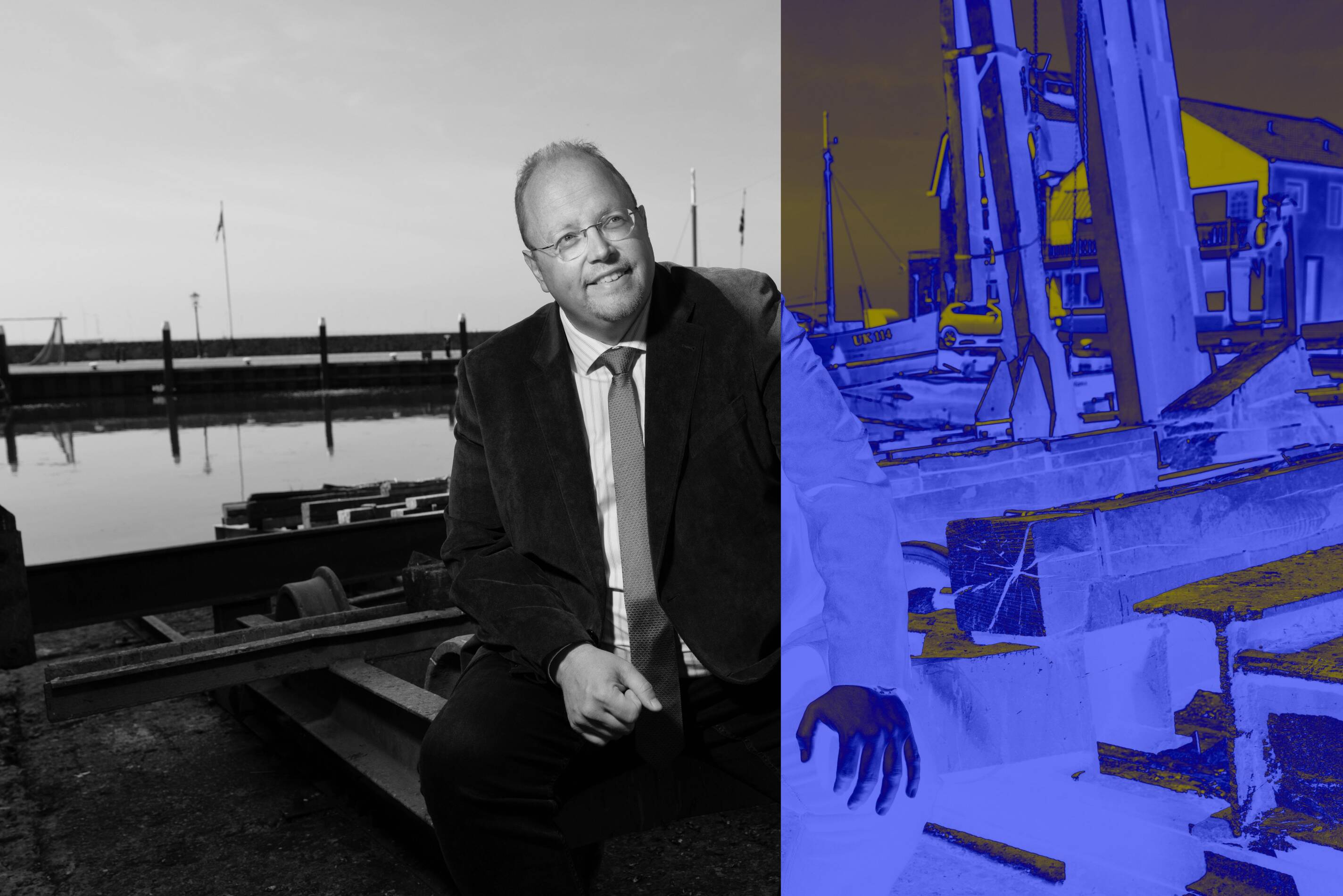
Ben Visser is mayor of the municipality of Eemsdelta (Groningen), treasurer of the Dutch Association of Mayors, Chairman of KNRM Eemshaven, member of the Advisory Board of the National Veterans Platform, member of the Supervisory Board of Patrimonium Urk, and Special Registrar of Civil Status for the municipality of Urk.
Want to learn more about Comenius?
Laura de Moor, Clara Smits and Karen Meulenkamp would be happy to advise you.
Please contact us at 033 - 422 99 29 or email us at info@comeniusleergang.nl.

Although Ben Visser tells his story with a view of the Grote Markt in the city of Groningen, his heart goes out to the countryside. To Urk, where he grew up and took his first steps in politics. To Scherpenzeel, the Gelderland municipality where he became the youngest mayor in the country in 2013. And of course, to Eemsdelta, which stretches from Termunterzijl to Middelstum. Since his appointment, he has lived with his family in Loppersum: in the heart of the earthquake area. He is therefore fully involved in the earthquake issues, as well as the unrest that has arisen now that Eemshaven is being mentioned as a possible location for a nuclear power plant.
A stacker and young politician
Visser is a typical ‘stacker’ of qualifications, he explains. As a child, he always wanted to play outside and often wandered off, curious to see what lay beyond the horizon. ‘In secondary school, I was less motivated and moved down to MAVO. After that, I started stacking diplomas: first MBO, then HBO in Zwolle.’ Meanwhile, he had already been introduced to politics at a young age. ‘At one point, I was asked by the ChristenUnie to join the municipal council in Urk. My mind immediately jumped to paving stones and streetlights, but I quickly discovered that municipal politics is also about healthcare and education, nightlife and sports, housing and work. At 24, I became a council member, and four years later an alderman and deputy mayor. And at 31, mayor of Scherpenzeel.’
Difficult moments and a steep learning curve
In Scherpenzeel, Visser decided to delve deeper into complex governance issues and pursued a Master’s degree in Public Administration in Utrecht. ‘That was an intense trajectory with a steep learning curve. Although it was a wonderful period, I experienced my share of difficult moments. At one point, I developed heart rhythm issues and subsequently a burnout. That brought an end to my mayoralty. My wife felt I should finish my term after my recovery, and in hindsight she was right, but I decided against it.’
Instead, he worked successively in business and education. ‘The tough world of international business no longer suited me, because I am too people-focused for that. Meanwhile, the country was at a standstill due to COVID-19, and I temporarily started working as a teacher at a secondary school. They were short-staffed there, and I thoroughly enjoyed teaching German, economics, and geography for two years.’ Although the school wanted to keep him, public administration kept pulling him back. When the mayoral vacancy for Eemsdelta came along, he did not hesitate and was appointed in 2022.
Administrative challenges in Eemsdelta
As the first mayor of the merged municipality of Eemsdelta, Visser had to roll up his sleeves. ‘You have to build such a new municipality from the ground up, which is a major administrative challenge. Especially when you consider everything that is going on here: the earthquake issues, youth nuisance in Delfzijl, and now the unrest over the nuclear power plant.’ After almost five years in office, he feels completely in his element. ‘My work is about people: just like the pupils in the past, the residents of this municipality are entrusted to my care, and I find that meaningful. In addition, I know the business world from the inside out, which also comes in handy.’
The power of polyphony
Comenius came onto his radar when, after a few years in Eemsdelta, he felt the need to grow on a deeper level. The offerings from Comenius immediately appealed to him. ‘I needed depth and breadth and wanted to reflect on my leadership. What has stuck with me is the power of polyphony and how you learn to lay multiple perspectives side by side to form a more complete picture. As a mayor, you stand above parties and it is your duty to connect, ensuring that all voices in the municipality truly count. The art is to make sure everyone comes into their own and listens to one another. By practicing the Socratic dialogue, you learn to listen better and to delay or completely hold back your judgment. The program has provided me with a repertoire for action that allows me to govern more calmly and with greater wisdom.’
Daily discussions about a nuclear power plant
The news about the potential arrival of a nuclear power plant is currently occupying Visser’s mind. ‘By nature, I am someone who wants to storm the barricades with a drawn sword, but I have changed in that respect. I have learned to listen more calmly to what presents itself and to respond with a certain wisdom. Is the energy transition possible without nuclear energy when the demand for electricity is growing so fast? And if you do choose nuclear energy, where are you going to place that plant? You also have to ask yourself how wise it is to build a nuclear power plant in an area that is as prone to earthquakes as this one. No matter how you look at the energy transition and what it requires, it is simply a fact that there are no supporters of a nuclear power plant in our municipality, unlike the residents of Zeeland. Furthermore, the national government has promised multiple times that there would be no nuclear power plant here. The question now is whether the government speaks with actions or with words.’
Strong emotions
The importance of polyphony and learning to look at multiple perspectives deeply touched him during the program. ‘I am calm on the outside, but inside I experience strong emotions. Sometimes I found that difficult. After a busy workweek, I found it hard to listen to contributions from speakers who, in my view, were somewhat biased. I am a Christian and a bit conservative, so at times I felt like a bit of an outlier in the group. Ideas would clash with my own personal beliefs and worldview.
I had to work my way through that, but by the end of such a module, I always managed to.’
Never done learning
The program inspired Visser to start studying again: theology, law, or perhaps history. ‘First, I am going to follow a leadership program on national security at the Ministries of Justice and Security and Defence. One-third of Dutch energy is generated in our region, and we are a transit port for NATO. I want to thoroughly understand those issues, which is why I am back to studying. I am not done learning – no one ever is.’
TEXT: MARJAN BROUWERS • PHOTO: JEROEN VAN KOOTEN
‘My career has taken me into different worlds,’ says Ben Visser, 44, father of five and member of the ChristenUnie party, ‘but that is how life can go.’ In 2022, he took office as mayor of the Groningen merged municipality of Eemsdelta, a place where he feels completely at home. ‘The core duty of a mayor is to connect people and to ensure that everyone gets their due. It is a profession in which you never stop learning.’ To further deepen his knowledge in that profession, he completed the National Leadership Course at Comenius.
you never stop learning’
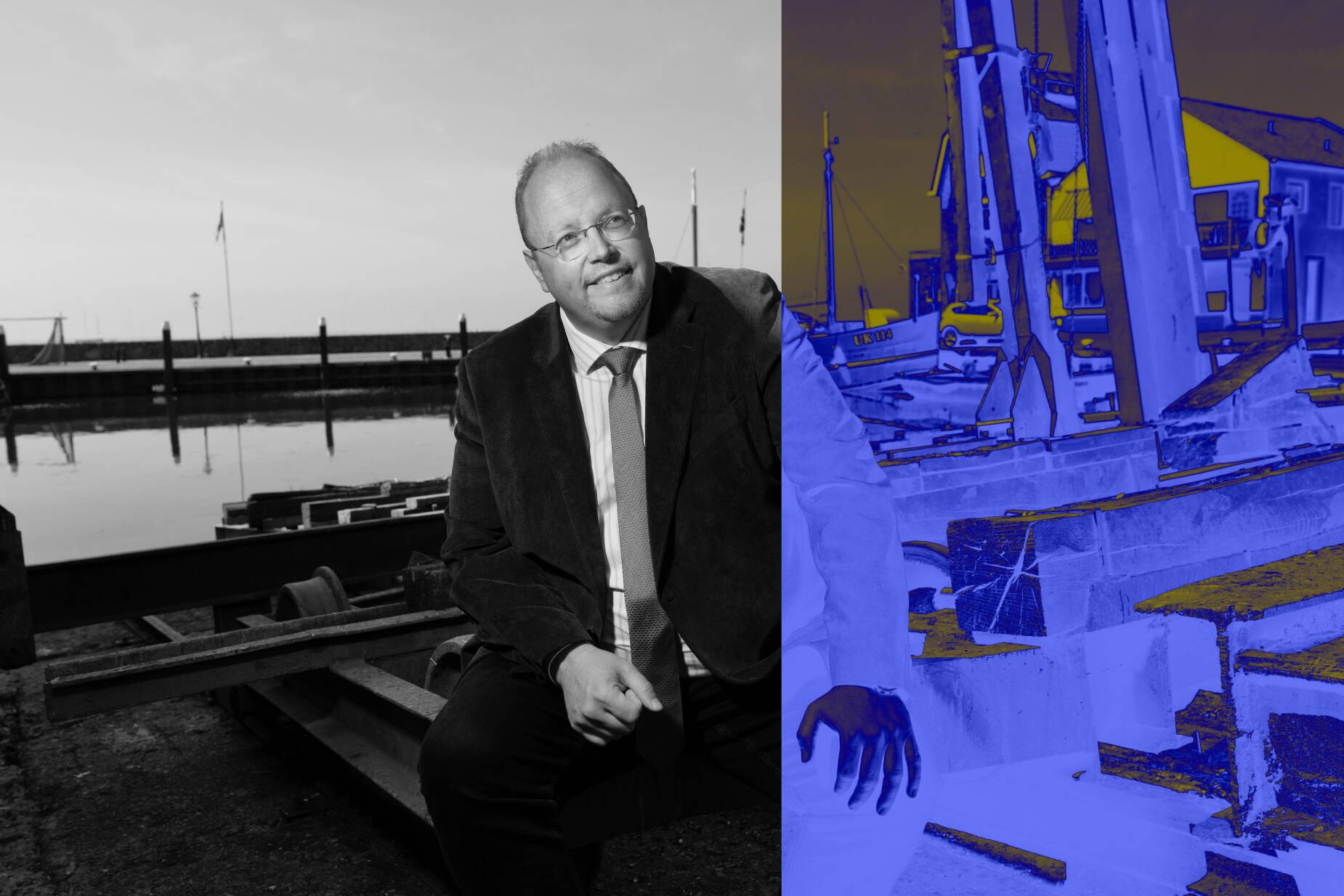
Want to learn more about Comenius?
Laura de Moor, Clara Smits and Karen Meulenkamp would be happy to advise you.
Please contact us at 033 - 422 99 29 or email us at info@comeniusleergang.nl.
Ben Visser is mayor of the municipality of Eemsdelta (Groningen), treasurer of the Dutch Association of Mayors, Chairman of KNRM Eemshaven, member of the Advisory Board of the National Veterans Platform, member of the Supervisory Board of Patrimonium Urk, and Special Registrar of Civil Status for the municipality of Urk.
Although Ben Visser tells his story with a view of the Grote Markt in the city of Groningen, his heart goes out to the countryside. To Urk, where he grew up and took his first steps in politics. To Scherpenzeel, the Gelderland municipality where he became the youngest mayor in the country in 2013. And of course, to Eemsdelta, which stretches from Termunterzijl to Middelstum. Since his appointment, he has lived with his family in Loppersum: in the heart of the earthquake area. He is therefore fully involved in the earthquake issues, as well as the unrest that has arisen now that Eemshaven is being mentioned as a possible location for a nuclear power plant.
A stacker and young politician
Visser is a typical ‘stacker’ of qualifications, he explains. As a child, he always wanted to play outside and often wandered off, curious to see what lay beyond the horizon. ‘In secondary school, I was less motivated and moved down to MAVO. After that, I started stacking diplomas: first MBO, then HBO in Zwolle.’ Meanwhile, he had already been introduced to politics at a young age. ‘At one point, I was asked by the ChristenUnie to join the municipal council in Urk. My mind immediately jumped to paving stones and streetlights, but I quickly discovered that municipal politics is also about healthcare and education, nightlife and sports, housing and work. At 24, I became a council member, and four years later an alderman and deputy mayor. And at 31, mayor of Scherpenzeel.’
Difficult moments and a steep learning curve
In Scherpenzeel, Visser decided to delve deeper into complex governance issues and pursued a Master’s degree in Public Administration in Utrecht. ‘That was an intense trajectory with a steep learning curve. Although it was a wonderful period, I experienced my share of difficult moments. At one point, I developed heart rhythm issues and subsequently a burnout. That brought an end to my mayoralty. My wife felt I should finish my term after my recovery, and in hindsight she was right, but I decided against it.’
Instead, he worked successively in business and education. ‘The tough world of international business no longer suited me, because I am too people-focused for that. Meanwhile, the country was at a standstill due to COVID-19, and I temporarily started working as a teacher at a secondary school. They were short-staffed there, and I thoroughly enjoyed teaching German, economics, and geography for two years.’ Although the school wanted to keep him, public administration kept pulling him back. When the mayoral vacancy for Eemsdelta came along, he did not hesitate and was appointed in 2022.
Administrative challenges in Eemsdelta
As the first mayor of the merged municipality of Eemsdelta, Visser had to roll up his sleeves. ‘You have to build such a new municipality from the ground up, which is a major administrative challenge. Especially when you consider everything that is going on here: the earthquake issues, youth nuisance in Delfzijl, and now the unrest over the nuclear power plant.’ After almost five years in office, he feels completely in his element. ‘My work is about people: just like the pupils in the past, the residents of this municipality are entrusted to my care, and I find that meaningful. In addition, I know the business world from the inside out, which also comes in handy.’
The power of polyphony
Comenius came onto his radar when, after a few years in Eemsdelta, he felt the need to grow on a deeper level. The offerings from Comenius immediately appealed to him. ‘I needed depth and breadth and wanted to reflect on my leadership. What has stuck with me is the power of polyphony and how you learn to lay multiple perspectives side by side to form a more complete picture. As a mayor, you stand above parties and it is your duty to connect, ensuring that all voices in the municipality truly count. The art is to make sure everyone comes into their own and listens to one another. By practicing the Socratic dialogue, you learn to listen better and to delay or completely hold back your judgment. The program has provided me with a repertoire for action that allows me to govern more calmly and with greater wisdom.’
Daily discussions about a nuclear power plant
The news about the potential arrival of a nuclear power plant is currently occupying Visser’s mind. ‘By nature, I am someone who wants to storm the barricades with a drawn sword, but I have changed in that respect. I have learned to listen more calmly to what presents itself and to respond with a certain wisdom. Is the energy transition possible without nuclear energy when the demand for electricity is growing so fast? And if you do choose nuclear energy, where are you going to place that plant? You also have to ask yourself how wise it is to build a nuclear power plant in an area that is as prone to earthquakes as this one. No matter how you look at the energy transition and what it requires, it is simply a fact that there are no supporters of a nuclear power plant in our municipality, unlike the residents of Zeeland. Furthermore, the national government has promised multiple times that there would be no nuclear power plant here. The question now is whether the government speaks with actions or with words.’
Strong emotions
The importance of polyphony and learning to look at multiple perspectives deeply touched him during the program. ‘I am calm on the outside, but inside I experience strong emotions. Sometimes I found that difficult. After a busy workweek, I found it hard to listen to contributions from speakers who, in my view, were somewhat biased. I am a Christian and a bit conservative, so at times I felt like a bit of an outlier in the group. Ideas would clash with my own personal beliefs and worldview.
I had to work my way through that, but by the end of such a module, I always managed to.’
Never done learning
The program inspired Visser to start studying again: theology, law, or perhaps history. ‘First, I am going to follow a leadership program on national security at the Ministries of Justice and Security and Defence. One-third of Dutch energy is generated in our region, and we are a transit port for NATO. I want to thoroughly understand those issues, which is why I am back to studying. I am not done learning – no one ever is.’

TEXT: MARJAN BROUWERS •
PHOTO: JEROEN VAN KOOTEN
‘My career has taken me into different worlds,’ says Ben Visser, 44, father of five and member of the ChristenUnie party, ‘but that is how life can go.’ In 2022, he took office as mayor of the Groningen merged municipality of Eemsdelta, a place where he feels completely at home. ‘The core duty of a mayor is to connect people and to ensure that everyone gets their due. It is a profession in which you never stop learning.’ To further deepen his knowledge in that profession, he completed the National Leadership Course at Comenius.