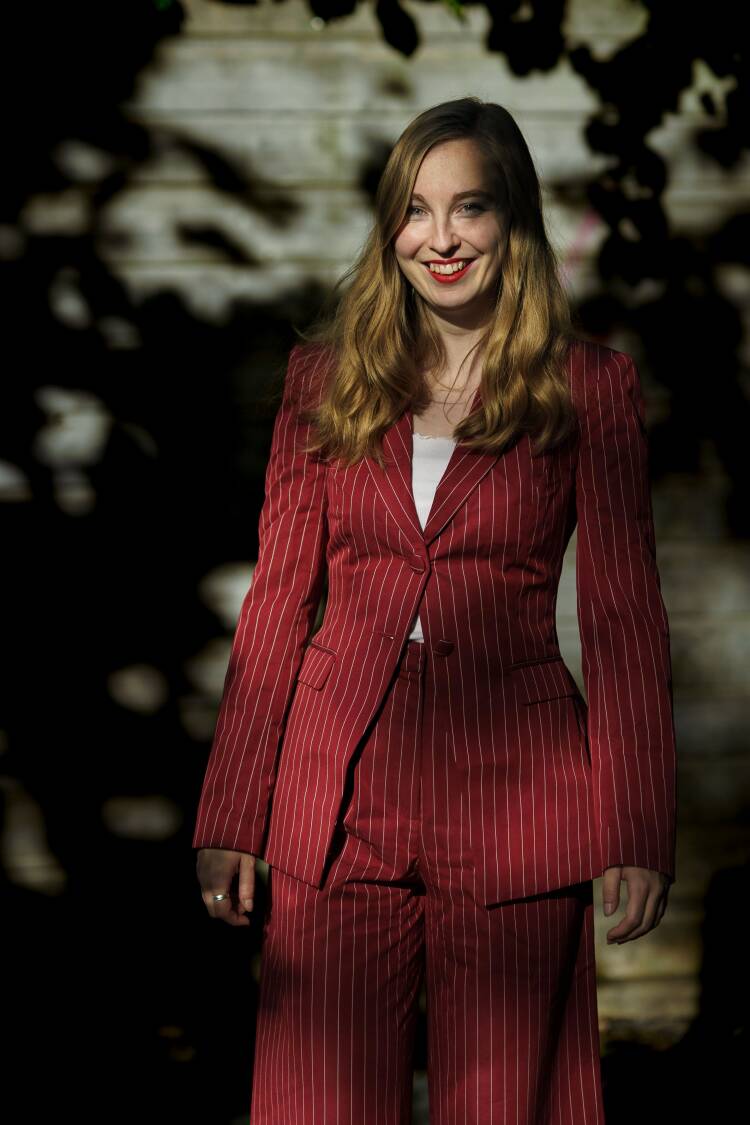
Less lonely,
thanks to the
Greek gods


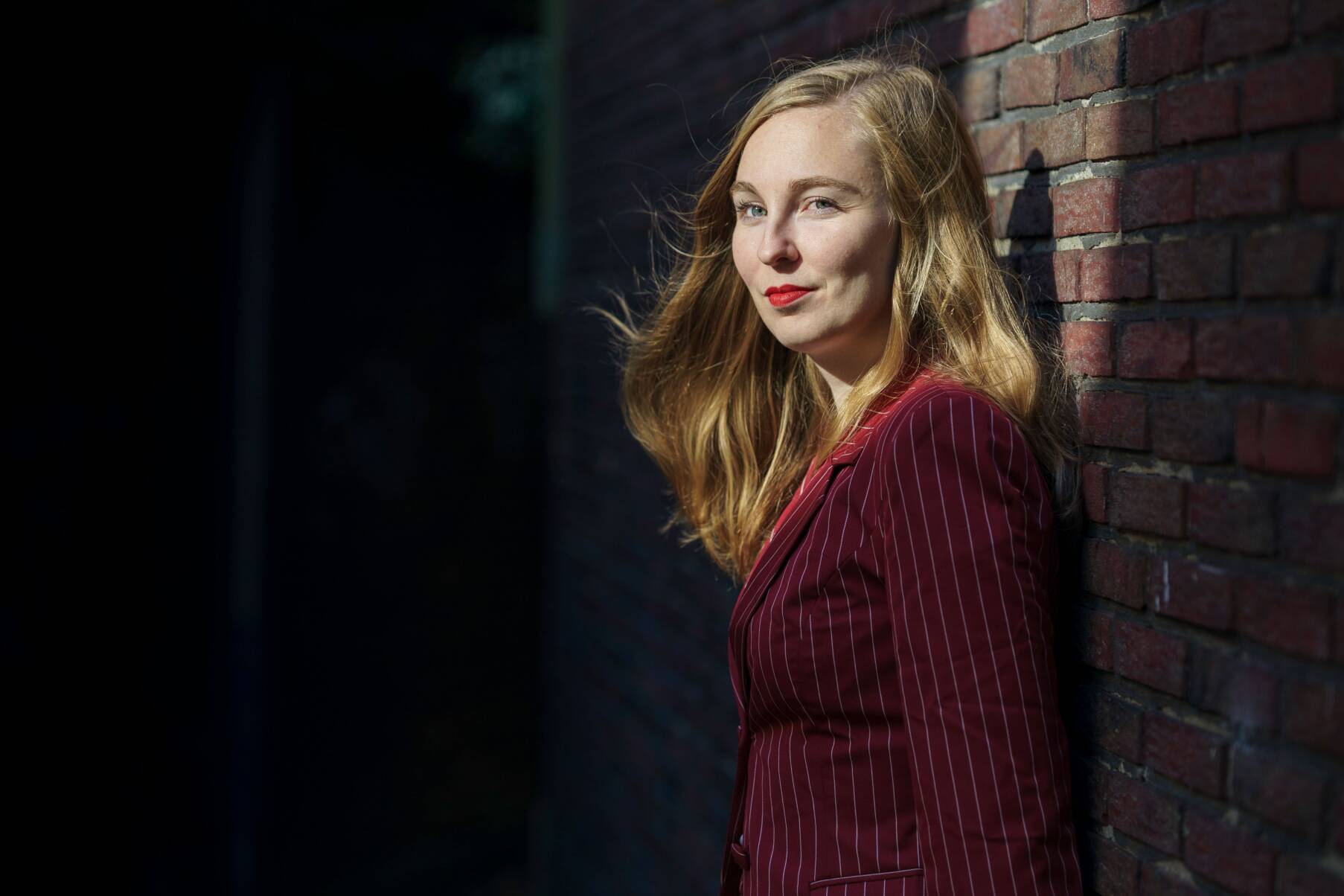
PHOTO: REYER BOXEM

PROPOSITION
Matthew Drury – Faculteit der Letteren
‘The major problems in the world are the result of the difference between the way
nature works and the way people think.’ (Gregory Bateson)
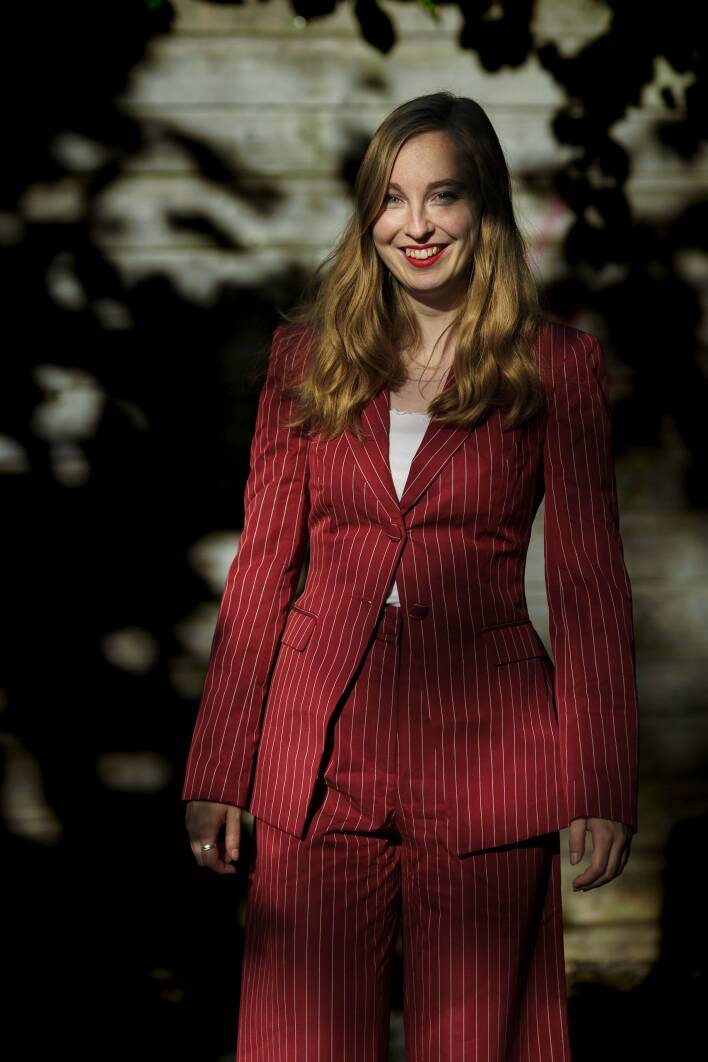
Ninah Tiemersma (1997) completed a Bachelor’s degree in Classical Studies and a Master’s degree in Education in Language and Cultural Studies at the University of Groningen. She teaches Greek and Latin Language and Culture at the Praedinius Gymnasium in Groningen (since the academic year 2026, previously at Stedelijk Gymnasium Piter Jelles in Leeuwarden). In addition, she gives workshops, lectures, coaching sessions, and theatrical performances on personal trauma, the healing power of literature from the classical era, and the importance of mental wellbeing in education. In 2025, she was elected Teacher of the Year. In early November, her book Dit is geen heldenverhaal, Hoe Griekse tragedies mijn leven redden (This Is Not a Hero’s Story: How Greek Tragedies Saved My Life) will be published. An interview with Tiemersma previously appeared in the winter 2025 edition of Broerstraat 5 (Dutch only)
Read the jury report here.
“
‘What could be different so that it doesn’t end so tragically?’
Watch her speech here.
Watch her introduction video here.
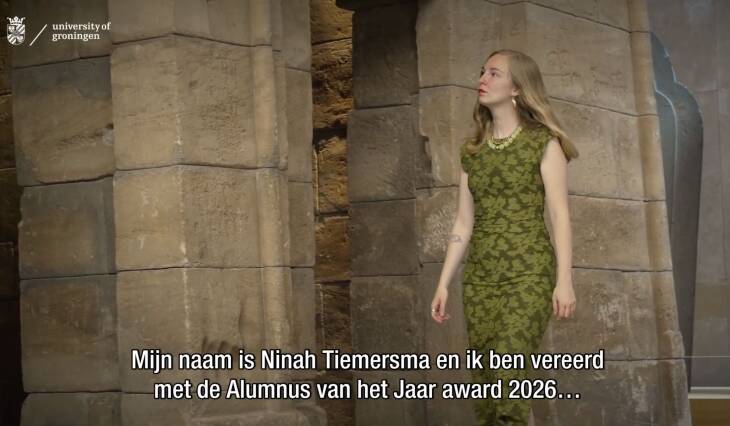
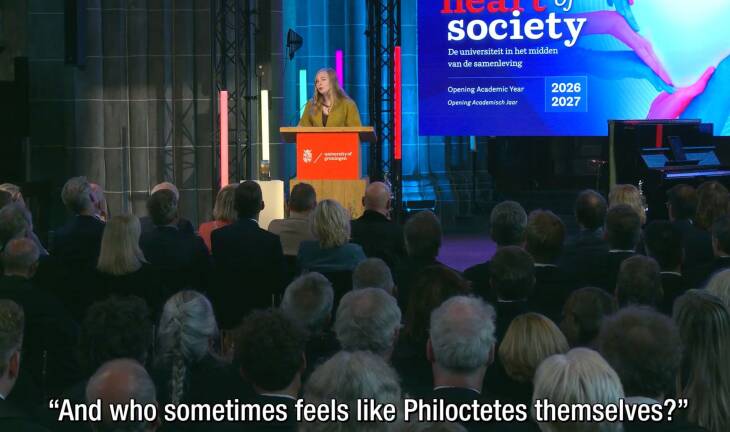
Ninah Tiemersma was one of the speakers at the Opening of the Academic Year on 31 August.
I
TEXT: LIEKE VAN DEN KROMMENACKER
Teacher of the Year 2025 and University of Groningen Alumnus of the Year 2026,
Ninah Tiemersma, a Classics teacher at Praedinius Gymnasium, looks beyond the syllabus.
In her lessons, students also learn about loneliness, shame, and infidelity.
PHOTO: REYER BOXEM
n Ninah Tiemersma’s (Leeuwarden, 1997) classroom, it is not uncommon for students to leave a Greek or Latin lesson feeling a little less lonely or with greater compassion for those less fortunate than themselves. Tiemersma, a Classics teacher at Praedinius Gymnasium in Groningen, does not
Privileged
As a teenager, Tiemersma attended a gymnasium (Dutch school, comparable to grammar school) in Leeuwarden. Despite being a good student, she felt like a fish out of water. ‘I lived with my mother in a small flat on the third floor - and I loved it; it was our first home after the divorce. My classmates, on the other hand, lived in what felt like palaces to me and wore expensive clothes. Different things mattered to me. I just wanted to learn and get good grades.’ Now that she teaches at a gymnasium herself, she consciously reminds her privileged students of the facts. For example, she uses a text about the exclusion of women from the ancient Olympic Games to discuss sports and inequality of opportunity.
Tiemersma: ‘Most children assume that sports are free for everyone. When I tell them that I couldn’t afford to play sports throughout my entire secondary school years, it often falls silent. I think it’s important to try to give them some awareness of their surroundings. So that they realize: Hey, I don’t need to emphasize how much money I have twenty times a lesson, because that might not be so nice for someone else.’
Secondary school, Tiemersma believes, is the perfect place to teach these kinds of ‘life skills’ lessons. ‘Teenagers’ brains are still flexible. You can teach them so much to prepare them - at least to some extent - for the world they will enter, where not everyone has it equally good.’ Other subjects are just as suitable as Greek and Latin for this purpose, she argues. ‘In biology, you can learn about addiction; in geography, about beauty or climate change. Every subject offers opportunities to connect with students’ experiences and broaden them at the same time. For example, if you dedicate four lessons per subject to these kinds of themes - simply linked to your regular lessons - you could create a comprehensive, continuous curriculum on wellbeing.’
Safe space
However, a prerequisite is that the classroom is a safe space. That is why Tiemersma sometimes shares her own vulnerabilities or has students write down an assignment and tear it up instead of discussing it in class. ‘It’s not like I walk into the classroom on Monday morning and say: Alright, today we’re going to talk about suicide. I always build my lessons carefully. Sometimes, I have them rewrite the end of a tragedy with the idea: What could be different so that it doesn’t end so tragically? And sometimes weeks go by where the texts don’t lend themselves to such discussions. And that’s fine too.’
Tiemersma’s teaching ideas are also gaining traction outside the classroom. Since 2022, she has offered one-on-one coaching, acting as a kind of ‘bibliotherapist’, with the Classics as her guide. The idea is the same as in her lessons: she reads a myth or tragedy with a client and then discusses it. Tiemersma emphasizes that these conversations are not therapy. ‘I’m not going to dig into your deepest traumas. That’s not my role. We simply talk about the text, and I ask questions so we can discover what can be learned from it. Often, I’ll assign a task. For example, I might ask someone to write a letter to the main character and offer them advice.’
As if all this were not enough, she will soon publish her first book: This Is Not a Hero’s Story: How Greek Tragedies Saved My Life, with Just Publishers in Emmen. Through ten well-known tragedies, such as Ajax, Medea, and Antigone, Tiemersma tells her life story. ‘Not because I want to make a big show of myself, but because I want to demonstrate how literature can contribute to mental wellbeing.’
Medication addiction
Tiemersma knows from personal experience that this path is not always smooth. She also knows that tragedies and their characters can be a source of comfort in difficult times. Tiemersma grew up mostly alone with her mother. When she was eight, her parents divorced due to her father’s severe medication addiction. ‘He had accumulated nearly € 200,000 in debt during his marriage to my mother. After the divorce, we had to live on € 50 a week.’
Tiemersma found solace in Iphigeneia, the mythical figure sacrificed by her father Agamemnon in exchange for favourable winds so he could sail to Troy. ‘The first time I read this tragedy, I was deeply saddened,’ she says. ‘I recognized the feeling of not being a priority to one of my parents. With my father, everything had to give way to his medication; with Agamemnon, it was the wind.’ Thanks to Iphigeneia, Tiemersma felt less alone.
She hopes that tragedies can hold similar meaning for her students. ‘I know not everyone is waiting for this. There are always students who think: I just want to know what I need to study for the test. And that’s fine. But maybe those who listen with half an ear will still take something away. If I manage to make even one student feel better, my mission is accomplished.’
just teach grammar and vocabulary. She also aims to improve her students’ wellbeing - with a little help from the Greek and Roman gods and heroes. According to Tiemersma, their stories are perfectly suited to helping people navigate major themes and emotions such as loneliness, shame, beauty, or infidelity.
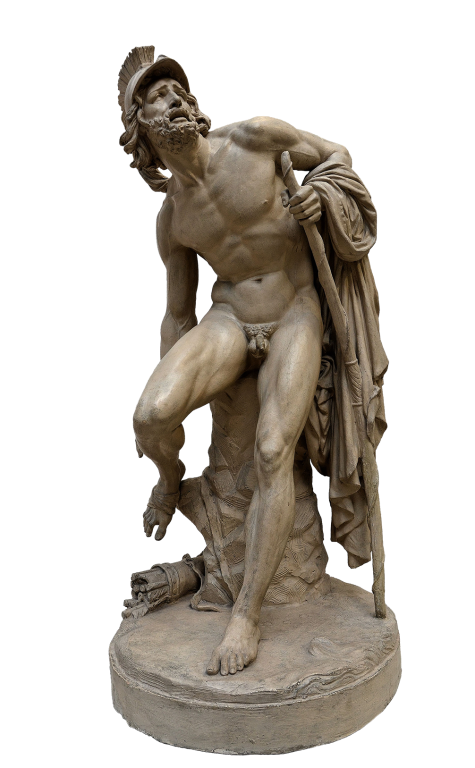
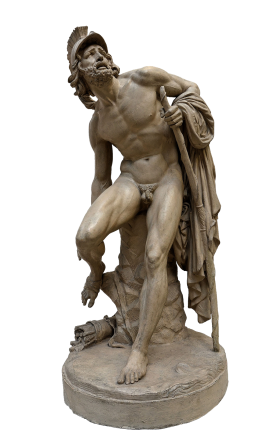
Take Philoctetes, a tragedy about a man stranded on an island for ten years. ‘He feels incredibly lonely, but no one wants to rescue him because his foot smells,’ says Tiemersma. ‘This is what I discuss with my students.’ For example, during a guest lesson in Woerden, her audience initially laughed at the man with the smelly foot. But when Tiemersma asked, ‘What would you think if you were stranded alone somewhere for ten years? What if I locked the door now and didn’t return for ten years?’ a meaningful conversation soon emerged about the impact of the pandemic on young people.
Her approach earned Tiemersma the title of Teacher of the Year last year. This year, the University of Groningen, where she herself studied, also named her Alumnus of the Year. Tiemersma joins an illustrious list of past recipients, including investigative journalist Christiaan Triebert, philosopher Stine Jensen, and pulmonologist Sander de Hosson. According to the jury, Tiemersma ‘makes a special contribution to society every day’. And: ‘She passes on knowledge to a new generation and guides these young people on their path to adulthood.’
Less lonely,
thanks to the
Greek gods
PHOTO: REYER BOXEM
Matthew Drury – Faculteit der Letteren
‘The major problems in the world are the result of the difference between the way
nature works and the way people think.’ (Gregory Bateson)
Privileged
As a teenager, Tiemersma attended a gymnasium (Dutch school, comparable to grammar school) in Leeuwarden. Despite being a good student, she felt like a fish out of water. ‘I lived with my mother in a small flat on the third floor - and I loved it; it was our first home after the divorce. My classmates, on the other hand, lived in what felt like palaces to me and wore expensive clothes. Different things mattered to me. I just wanted to learn and get good grades.’ Now that she teaches at a gymnasium herself, she consciously reminds her privileged students of the facts. For example, she uses a text about the exclusion of women from the ancient Olympic Games to discuss sports and inequality of opportunity.
Tiemersma: ‘Most children assume that sports are free for everyone. When I tell them that I couldn’t afford to play sports throughout my entire secondary school years, it often falls silent. I think it’s important to try to give them some awareness of their surroundings. So that they realize: Hey, I don’t need to emphasize how much money I have twenty times a lesson, because that might not be so nice for someone else.’
Secondary school, Tiemersma believes, is the perfect place to teach these kinds of ‘life skills’ lessons. ‘Teenagers’ brains are still flexible. You can teach them so much to prepare them - at least to some extent - for the world they will enter, where not everyone has it equally good.’ Other subjects are just as suitable as Greek and Latin for this purpose, she argues. ‘In biology, you can learn about addiction; in geography, about beauty or climate change. Every subject offers opportunities to connect with students’ experiences and broaden them at the same time. For example, if you dedicate four lessons per subject to these kinds of themes - simply linked to your regular lessons - you could create a comprehensive, continuous curriculum on wellbeing.’
Safe space
However, a prerequisite is that the classroom is a safe space. That is why Tiemersma sometimes shares her own vulnerabilities or has students write down an assignment and tear it up instead of discussing it in class. ‘It’s not like I walk into the classroom on Monday morning and say: Alright, today we’re going to talk about suicide. I always build my lessons carefully. Sometimes, I have them rewrite the end of a tragedy with the idea: What could be different so that it doesn’t end so tragically? And sometimes weeks go by where the texts don’t lend themselves to such discussions. And that’s fine too.’
Tiemersma’s teaching ideas are also gaining traction outside the classroom. Since 2022, she has offered one-on-one coaching, acting as a kind of ‘bibliotherapist’, with the Classics as her guide. The idea is the same as in her lessons: she reads a myth or tragedy with a client and then discusses it. Tiemersma emphasizes that these conversations are not therapy. ‘I’m not going to dig into your deepest traumas. That’s not my role. We simply talk about the text, and I ask questions so we can discover what can be learned from it. Often, I’ll assign a task. For example, I might ask someone to write a letter to the main character and offer them advice.’
As if all this were not enough, she will soon publish her first book: This Is Not a Hero’s Story: How Greek Tragedies Saved My Life, with Just Publishers in Emmen. Through ten well-known tragedies, such as Ajax, Medea, and Antigone, Tiemersma tells her life story. ‘Not because I want to make a big show of myself, but because I want to demonstrate how literature can contribute to mental wellbeing.’
Watch her speech here.
Watch her introduction video here.
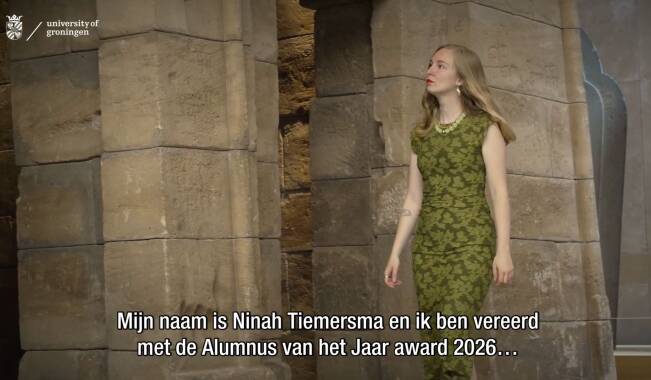
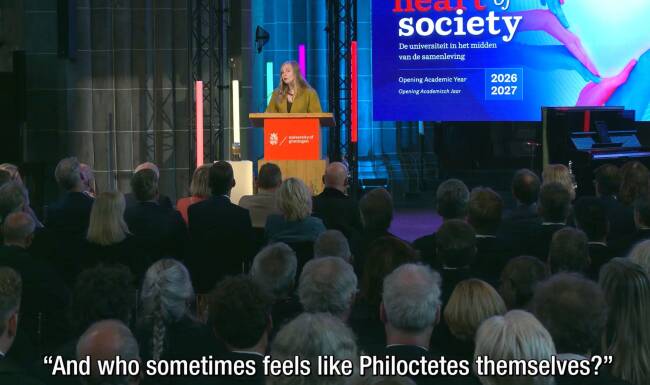
Ninah Tiemersma was one of the speakers at the Opening of the Academic Year on 31 August.
Medication addiction
Tiemersma knows from personal experience that this path is not always smooth. She also knows that tragedies and their characters can be a source of comfort in difficult times. Tiemersma grew up mostly alone with her mother. When she was eight, her parents divorced due to her father’s severe medication addiction. ‘He had accumulated nearly
€ 200,000 in debt during his marriage to my mother. After the divorce, we had to live on € 50 a week.’
Tiemersma found solace in Iphigeneia, the mythical figure sacrificed by her father Agamemnon in exchange for favourable winds so he could sail to Troy. ‘The first time I read this tragedy, I was deeply saddened,’ she says. ‘I recognized the feeling of not being a priority to one of my parents. With my father, everything had to give way to his medication; with Agamemnon, it was the wind.’ Thanks to Iphigeneia, Tiemersma felt less alone.
She hopes that tragedies can hold similar meaning for her students. ‘I know not everyone is waiting for this. There are always students who think: I just want to know what I need to study for the test. And that’s fine. But maybe those who listen with half an ear will still take something away. If I manage to make even one student feel better, my mission is accomplished.’
“
‘What could be different so that it doesn’t end so tragically?’
just teach grammar and vocabulary. She also aims to improve her students’ wellbeing - with a little help from the Greek and Roman gods and heroes. According to Tiemersma, their stories are perfectly suited to helping people navigate major themes and emotions such as loneliness, shame, beauty, or infidelity.
Take Philoctetes, a tragedy about a man stranded on an island for ten years. ‘He feels incredibly lonely, but no one wants to rescue him because his foot smells,’ says Tiemersma. ‘This is what I discuss with my students.’ For example, during a guest lesson in Woerden, her audience initially laughed at the man with the smelly foot. But when Tiemersma asked, ‘What would you think if you were stranded alone somewhere for ten years? What if I locked the door now and didn’t return for ten years?’ a meaningful conversation soon emerged about the impact of the pandemic on young people.
Her approach earned Tiemersma the title of Teacher of the Year last year. This year, the University of Groningen, where she herself studied, also named her Alumnus of the Year. Tiemersma joins an illustrious list of past recipients, including investigative journalist Christiaan Triebert, philosopher Stine Jensen, and pulmonologist Sander de Hosson. According to the jury, Tiemersma ‘makes a special contribution to society every day’. And: ‘She passes on knowledge to a new generation and guides these young people on their path to adulthood.’
n Ninah Tiemersma’s (Leeuwarden, 1997) classroom, it is not uncommon for students to leave a Greek or Latin
I
PHOTO: REYER BOXEM
PROPOSITION
Teacher of the Year 2025 and University of Groningen Alumnus of the Year 2026, Ninah Tiemersma,
a Classics teacher at Praedinius Gymnasium, looks beyond the syllabus. In her lessons, students also learn about loneliness, shame,
and infidelity.
TEXT: LIEKE VAN DEN KROMMENACKER
Ninah Tiemersma (1997) completed a Bachelor’s degree in Classical Studies and a Master’s degree in Education in Language and Cultural Studies at the University of Groningen. She teaches Greek and Latin Language and Culture at the Praedinius Gymnasium in Groningen (since the academic year 2026, previously at Stedelijk Gymnasium Piter Jelles in Leeuwarden). In addition, she gives workshops, lectures, coaching sessions, and theatrical performances on personal trauma, the healing power of literature from the classical era, and the importance of mental wellbeing in education. In 2025, she was elected Teacher of the Year. In early November, her book Dit is geen heldenverhaal, Hoe Griekse tragedies mijn leven redden (This Is Not a Hero’s Story: How Greek Tragedies Saved My Life) will be published. An interview with Tiemersma previously appeared in the winter 2025 edition of Broerstraat 5 (Dutch only)
Read the jury report here.