

PHOTO: ANP / HENRIETTE GUEST FOTOGRAFIE
Dutch government, really?
PHOTO: ANP / LAURENS VAN PUTTEN

Liset Hamming (1981) studied International Law in Groningen and was on the board of the student association Vindicat. She did not want to follow in her father’s footsteps and become a lawyer but instead devoted herself to societal issues. Over time, she ended up in journalism, working for the investigative platform Follow the Money. There, she became familiar with the Dutch Freedom of Information Act (WOB), the predecessor of the Woo. A few years later, she co-founded the expertise centre SPOON with her colleague Tim Staal.
PROPOSITION
Anastasia Prima Kristijarti – Faculteit Science & Engineering
No matter how dark the tunnel is, each step forward brings us closer to the light.
TEXT: JURGEN TIEKSTRA
As a law graduate Liset Hamming did not want to practise as a solicitor, but rather to
work on social issues. She is now director of the SPOON centre of expertise, which focuses on the Open Government Act (Woo).
A catch-all clause
SPOON advises journalists and NGOs on submitting Woo requests whilst also conducting research into the day-to-day application of the law. The centre of expertise also develops tools, such as the Woo Button, which, amongst other things, provides an overview of all current Woo requests; the Woo Generator, which helps users draft a request; and a web forum where people submitting Woo requests can consult with one another. Incidentally, there is also a European version of the Woo Button: the website Ask the EU.
‘It is quite remarkable that in the Netherlands, as citizens, we have an “information right”. This is slightly broader than the “document right” in, for example, Sweden,’ says Hamming. ‘Here, you have the right to all information unless one of the fourteen grounds for refusal listed in the Woo applies. There are five absolute and nine relative grounds for refusal. In the case of the latter, the government must make a separate assessment each time.’
If a government body invokes one of these grounds for refusal to prevent disclosure, a significant legal discussion can arise. ‘Then you have to file an objection and challenge it in court. But nine out of ten journalists do not have the time for that, let alone the inclination. One ground for refusal is that the interest of disclosure does not outweigh the interest of “the proper functioning of the State, other public law bodies, or administrative bodies”. We call this ground the “catch-all clause”.’
Political sensitivity
Hamming has also experienced that political sensitivity plays a role in whether or not a Woo request is granted. ‘Political sensitivity is not one of the grounds for refusal, but you see that in many of these requests, it is a reason why disclosure remains pending. This is not said out loud. But I have had a lawyer from a ministry tell me: “We cannot not disclose this information.” Yet, the Woo request has already been “in the pipeline” for three months, as we call it: this means that signatures still need to be collected from the various departments, and then it gets stuck somewhere. This is either because they think: Help, what do we do with this? Or because they are afraid: If this comes out, we will have a problem.’
The Dutch government is not necessarily the most transparent in the world, says Hamming. ‘If you look at India, for example, you would probably think: surely it must be worse there. But they have more powers to compel governments to disclose information and even to impose fines on civil servants if they do not make information public. For a journalistic project, I once submitted a Woo request in Slovenia and received all the information within two weeks, whereas in the Netherlands— and this is not an exaggeration— we have now been working on it for five years. This concerns the Ministry of Justice and Security.’
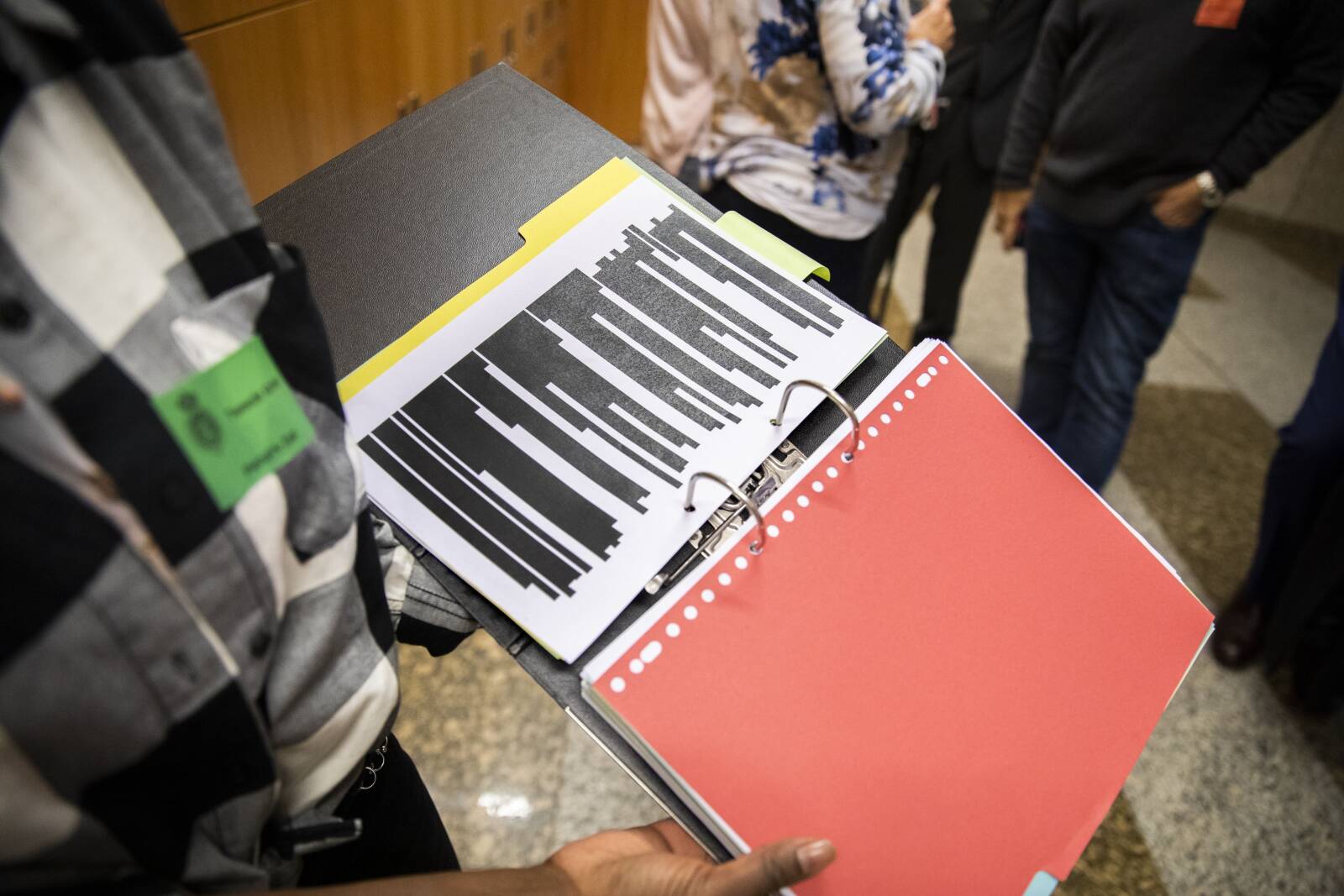
With the Woo in hand, any citizen of the Netherlands can request the disclosure of government documents. Or, as it is also known: anyone can ‘Woo’. This does not apply only to journalists and interest groups, Hamming, director of the Woo expertise centre SPOON, emphasises. No, it applies to anyone who wants to know how decision-making took place within a government body. ‘You and I, as citizens, can also use this,’ says Hamming. ‘If a bridge is built behind your garden, if toxic gases run beneath your house, or if an asylum seekers’ centre is placed in your street and you object to it… sometimes you just want to know: how did this happen? It can be incredibly frustrating if you do not have access to that information.’
SPOON
Next year, the Woo will have been in effect for five years. As is customary with new laws, it will then be evaluated. This evaluation will be conducted by a researcher at the University of Groningen: Prof. Aline Klingenberg, professor of Information Law, has been commissioned by the national government to carry out this task.
‘That is good news, I think,’ says Hamming. Although she admits that this is, to a large extent, a matter of feeling. After all, Groningen has become part of her DNA. When she started studying International Law in 1999, she swapped her hometown of Haarlem for the north of the Netherlands. ‘Yes, love; there is really only one reason why you would move far away to another place, isn’t there?’ she says cheerfully. ‘On the final exam results slip of the boy I was in love with, I saw that he was going to Groningen. A group of friends and I went to visit him once, and it was great. Then I thought: Oh, how wonderful! Groningen is far away, but not abroad.’
A second reason she feels positively about Groningen is that the province has, in her view, an excellent Woo contact person in Robert Nat. ‘As an expertise centre, we therefore hold Groningen in high regard. He dares to be independent within his own organisation when it comes to searching for information. He has made technical decisions to ensure better access to all systems to retrieve the requested information.’
The acronym SPOON stands for: Samenwerking Passieve Openbaarmaking Overheidsinformatie Nederland (Collaboration for Passive Disclosure of Government Information in the Netherlands). That is what it is all about: passive disclosure. The government is required to proactively disclose a vast amount of information, which makes it seem quite transparent. Through the websites of municipalities, provinces, ministries, and the Senate and House of Representatives, a large number of decision memos, letters, and background documents are published. However, the ‘toeslagenaffaire’ (the childcare benefits scandal) has shown that important information can still remain behind closed doors. The Woo is also intended for those documents that are not actively disclosed by a government body.
Dutch government, really?
PHOTO: ANP / HENRIETTE GUEST FOTOGRAFIE

PROPOSITION
Anastasia Prima Kristijarti – Faculteit Science & Engineering
No matter how dark the tunnel is, each step forward brings us closer to the light.
Political sensitivity
Hamming has also experienced that political sensitivity plays a role in whether or not a Woo request is granted. ‘Political sensitivity is not one of the grounds for refusal, but you see that in many of these requests, it is a reason why disclosure remains pending. This is not said out loud. But I have had a lawyer from a ministry tell me: “We cannot not disclose this information.” Yet, the Woo request has already been “in the pipeline” for three months, as we call it: this means that signatures still need to be collected from the various departments, and then it gets stuck somewhere. This is either because they think: Help, what do we do with this? Or because they are afraid: If this comes out, we will have a problem.’
The Dutch government is not necessarily the most transparent in the world, says Hamming. ‘If you look at India, for example, you would probably think: surely it must be worse there. But they have more powers to compel governments to disclose information and even to impose fines on civil servants if they do not make information public. For a journalistic project, I once submitted a Woo request in Slovenia and received all the information within two weeks, whereas in the Netherlands— and this is not an exaggeration— we have now been working on it for five years. This concerns the Ministry of Justice and Security.’
PHOTO: ANP / LAURENS VAN PUTTEN
A catch-all clause
SPOON advises journalists and NGOs on submitting Woo requests whilst also conducting research into the day-to-day application of the law. The centre of expertise also develops tools, such as the Woo Button, which, amongst other things, provides an overview of all current Woo requests; the Woo Generator, which helps users draft a request; and a web forum where people submitting Woo requests can consult with one another. Incidentally, there is also a European version of the Woo Button: the website Ask the EU.
‘It is quite remarkable that in the Netherlands, as citizens, we have an “information right”. This is slightly broader than the “document right” in, for example, Sweden,’ says Hamming. ‘Here, you have the right to all information unless one of the fourteen grounds for refusal listed in the Woo applies. There are five absolute and nine relative grounds for refusal. In the case of the latter, the government must make a separate assessment each time.’
If a government body invokes one of these grounds for refusal to prevent disclosure, a significant legal discussion can arise. ‘Then you have to file an objection and challenge it in court. But nine out of ten journalists do not have the time for that, let alone the inclination. One ground for refusal is that the interest of disclosure does not outweigh the interest of “the proper functioning of the State, other public law bodies, or administrative bodies”. We call this ground the “catch-all clause”.’

Liset Hamming (1981) studied International Law in Groningen and was on the board of the student association Vindicat. She did not want to follow in her father’s footsteps and become a lawyer but instead devoted herself to societal issues. Over time, she ended up in journalism, working for the investigative platform Follow the Money. There, she became familiar with the Dutch Freedom of Information Act (WOB), the predecessor of the Woo. A few years later, she
co-founded the expertise centre SPOON with her colleague Tim Staal.
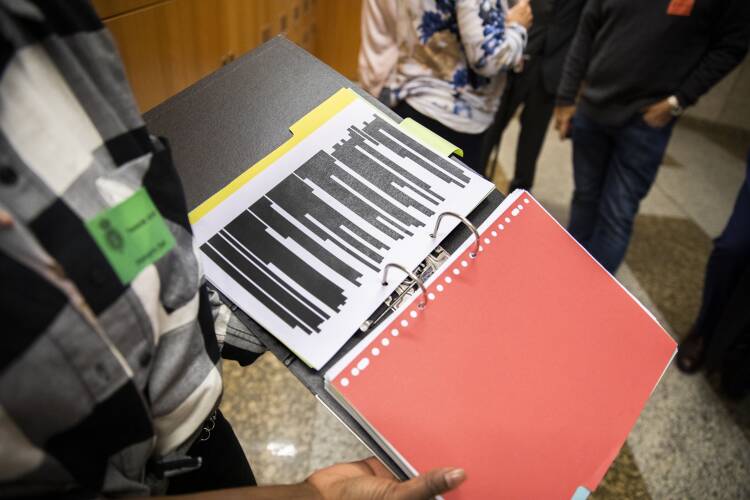
With the Woo in hand, any citizen of the Netherlands can request the disclosure of government documents. Or, as it is also known: anyone can ‘Woo’. This does not apply only to journalists and interest groups, Hamming, director of the Woo expertise centre SPOON, emphasises. No, it applies to anyone who wants to know how decision-making took place within a government body. ‘You and I, as citizens, can also use this,’ says Hamming. ‘If a bridge is built behind your garden, if toxic gases run beneath your house, or if an asylum seekers’ centre is placed in your street and you object to it… sometimes you just want to know: how did this happen? It can be incredibly frustrating if you do not have access to that information.’
SPOON
Next year, the Woo will have been in effect for five years. As is customary with new laws, it will then be evaluated. This evaluation will be conducted by a researcher at the University of Groningen: Prof. Aline Klingenberg, professor of Information Law, has been commissioned by the national government to carry out this task.
‘That is good news, I think,’ says Hamming. Although she admits that this is, to a large extent, a matter of feeling. After all, Groningen has become part of her DNA. When she started studying International Law in 1999, she swapped her hometown of Haarlem for the north of the Netherlands. ‘Yes, love; there is really only one reason why you would move far away to another place, isn’t there?’ she says cheerfully. ‘On the final exam results slip of the boy I was in love with, I saw that he was going to Groningen. A group of friends and I went to visit him once, and it was great. Then I thought: Oh, how wonderful! Groningen is far away, but not abroad.’
A second reason she feels positively about Groningen is that the province has, in her view, an excellent Woo contact person in Robert Nat. ‘As an expertise centre, we therefore hold Groningen in high regard. He dares to be independent within his own organisation when it comes to searching for information. He has made technical decisions to ensure better access to all systems to retrieve the requested information.’
The acronym SPOON stands for: Samenwerking Passieve Openbaarmaking Overheidsinformatie Nederland (Collaboration for Passive Disclosure of Government Information in the Netherlands). That is what it is all about: passive disclosure. The government is required to proactively disclose a vast amount of information, which makes it seem quite transparent. Through the websites of municipalities, provinces, ministries, and the Senate and House of Representatives, a large number of decision memos, letters, and background documents are published. However, the ‘toeslagenaffaire’ (the childcare benefits scandal) has shown that important information can still remain behind closed doors. The Woo is also intended for those documents that are not actively disclosed by a government body.
As a law graduate Liset Hamming did not want to practise as a solicitor, but rather to work on social issues. She is now director of the SPOON centre of expertise, which focuses on the Open Government Act (Woo).
TEXT: JURGEN TIEKSTRA