
University of Groningen Press (UGP) is an open access publisher. It provides a publishing platform for journals, books and series, inaugural lectures and open textbooks by teachers and researchers working at or with the University of Groningen. In general, these publications can be downloaded for free as PDF files. But you can also order them as (softcover) books. Recent publications include, for example ‘Sharing the Table: Culinary Journeys from the Middle East to the North of the Netherlands and the World’, ‘Grounding AI: Exploring the Role of Algorithms in Science’ and ‘The caregiver’s companion to intellectual disabilities and dementia: 100 real-life questions and answers’.
Open access publisher UGP – free journals, books
and lectures

FOTO: GERT TER HORST
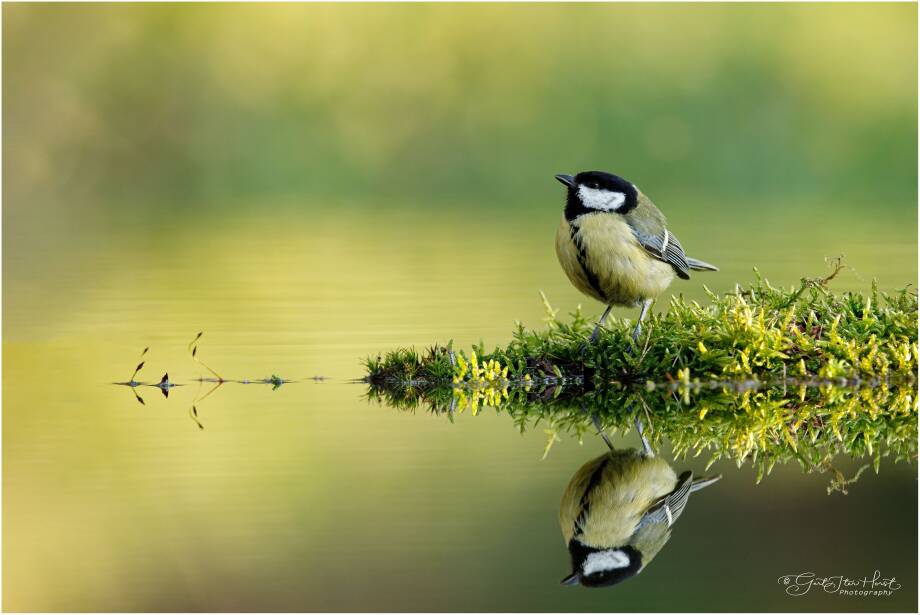
Bird behaviour during the solar eclipse
This summer, for a brief moment nothing else captured the Netherlands’ attention quite like the solar eclipse. The eclipse on 12 August, with 90% obscuration, was the largest since 1999, and the next one of this magnitude will not occur for over a hundred years (in 2135). The entire country was captivated, and many moved heaven and earth to get their hands on a pair of eclipse glasses. But how did our fellow earth inhabitants, the birds, actually react to this phenomenon? Theo Jurriens, astronomer, eclipse enthusiast, not a biologist, and a fan of curious people (young and old), called on the help of enthusiastic citizens to use a special device to detect anomalies in birdsong. His research is still ongoing, but a first analysis can already be provided.

Test your memory
We forget almost everything we store in our memory. Most of it is lost within the very first second. Hedderik van Rijn, Professor of Cognitive and Neurosciences at the University of Groningen, has developed a test to discover how well someone can still learn. This allows him to determine how quickly something is forgotten. In the test, the participant tries to memorise as many birds, countries, or pasta shapes as possible in eight minutes. The score is then compared with that of peers. This says something not only about your memory but also about the rest of your health.
Watch the UNL video with Hedderik van Rijn
Take the memory test
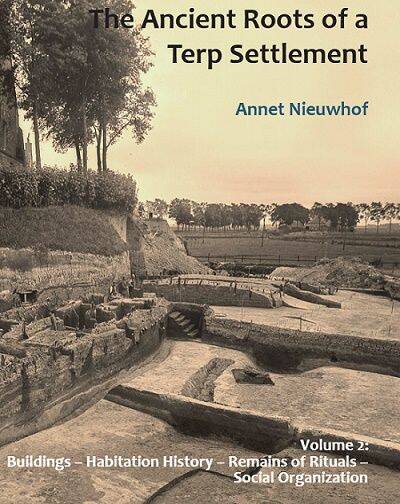
Ezinge Revisited
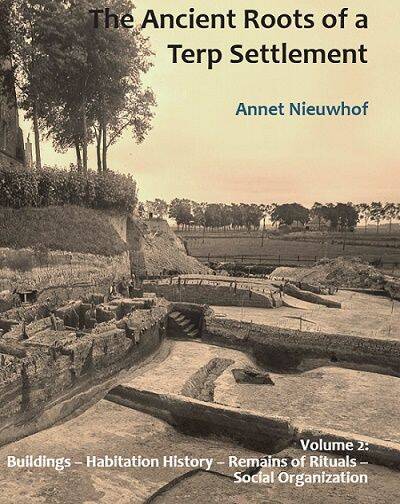
Annet Nieuwhof, lecturer and researcher at the Groningen Institute of Archaeology, has analysed all available archaeological data from excavations in Ezinge. This enormous project, which she worked on for ten years, was completed with the publication of the second volume of Ezinge revisited: The ancient roots of a terp settlement. Due to its significance for archaeology, Ezinge is sometimes referred to as the ‘Pompeii of the North’. The village has been continuously inhabited since 500 BC. This is unique for the Netherlands and makes Ezinge almost as old as the city of Rome. Between 1923 and 1934, the wierde (artificial dwelling mound) was carefully investigated under the leadership of Groningen professor Albert van Giffen. It is considered an iconic project in the history of Dutch archaeology. The excellently preserved material is among the crown jewels of the Groningen Institute of Archaeology.
Read more: Excavation of Ezinge terp iconic in Dutch archaeology
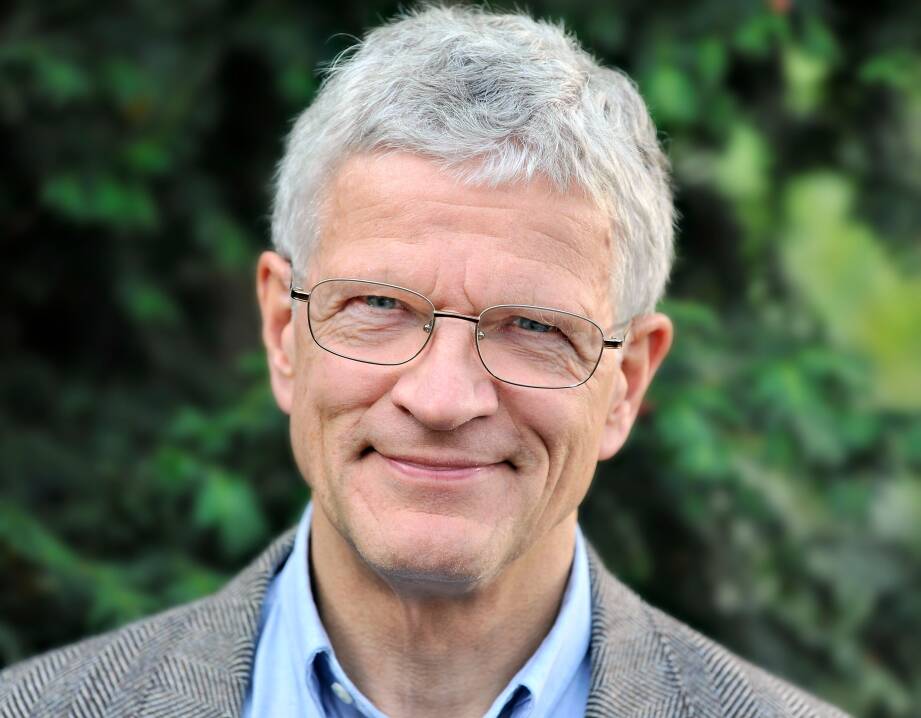
In memoriam: Doeko Bosscher
On 15 June 2026, former Rector Magnificus (1998–2002), former dean, and emeritus professor of Contemporary History, Prof. Dr D.F.J. (Doeko) Bosscher, passed away. Students and colleagues remember him as extremely thoughtful, modest, and kind. As an administrator, he was careful, committed, dedicated, and integrity-driven. Bosscher was a versatile man with a keen interest in politics, among other things. His doctoral research focused on the history of the ARP (Anti-Revolutionary Party). In 1978, he himself became a municipal councillor for the PvdA (Labour Party) in the former municipality of Warffum, serving as an alderman between 1982 and 1990.
He had a special connection with the United States, a country he knew well. In 1983, he was a Fulbright Scholar at Central Michigan University, which awarded him an honorary doctorate in 2000. That same year, Bosscher himself presented an honorary doctorate to Helmut Kohl, the former chancellor who had brought about German reunification.
World War II played a significant role in Bosscher’s work; he was born in 1949. He participated in academic discussions and commemorations, reflecting on topics such as the value of freedom. He also published a book about his uncle Fritz Conijn, who was executed as a resistance fighter in 1944. In addition, Bosscher was chairman of the Supervisory Board of the Westerbork Camp Memorial Centre. Besides (popular) scientific publications, Bosscher wrote the novel Strandvondst (Beach Find) and poetry.
PHOTO: ELMER SPAARGAREN
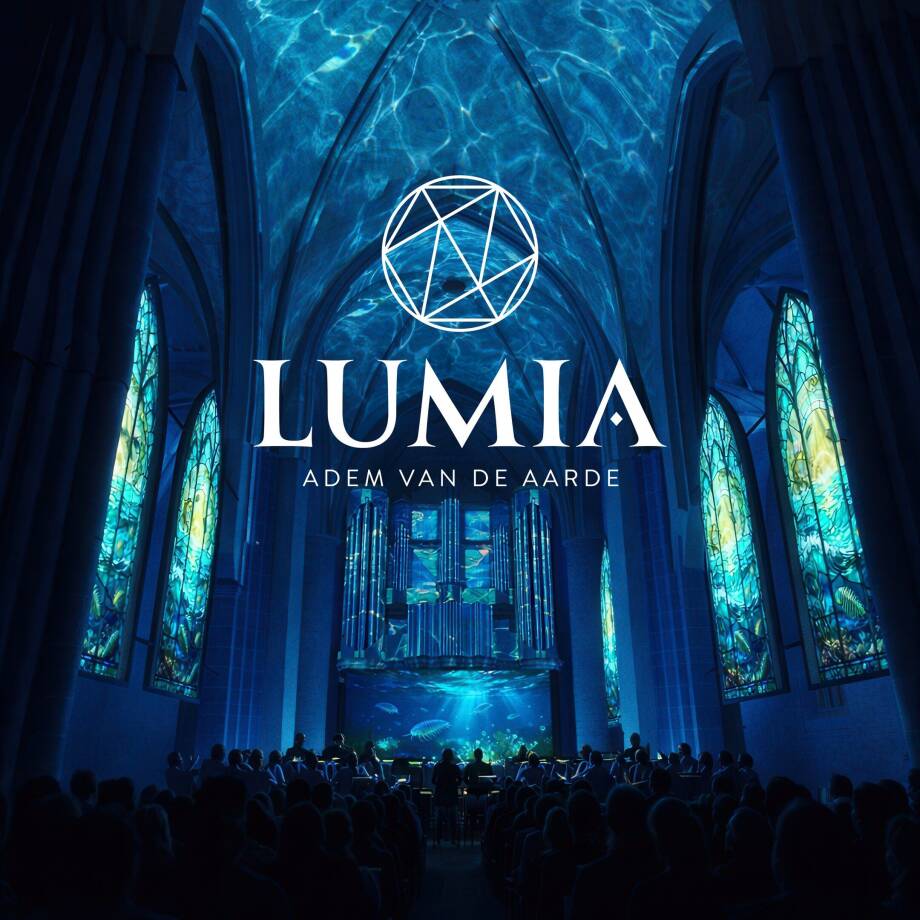
LUMIA – Breath of the Earth
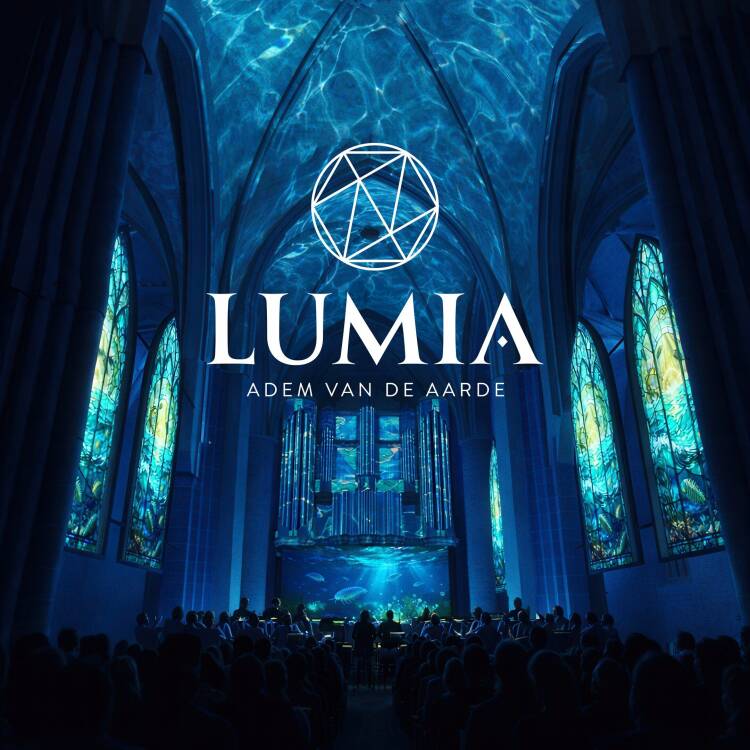
LUMIA is a grand audiovisual performance in the Martinikerk in Groningen, where live music, light art, and 3D video mapping come together. It tells the story of the Earth: from the formation of our planet to the fragile balance that humanity tests today. The monumental architecture of the Martinikerk is enveloped in light and video art, designed by the Amsterdam-based collective Veejays.com (including UG biology alumnus Hidde Kross and Martijn Adema). The music, composed by Hendrik de Boer, is performed live by the Groningen orchestra Harmonie ’67, conducted by Jan Wijenberg, with the participation of organist Henk de Vries. On 26, 27, and 28 November 2026, there will be two shows each evening (at 19:00 and 21:00).
For more information (in Dutch) and tickets
PHOTO: STUDIO OOSTRUM

Stevin Prize for Iris Sommer
On 7 October 2026, Prof. Dr Iris Sommer received the NWO Stevin Prize 2026. It is the highest scientific distinction in the Netherlands, alongside the Spinoza Prize. The prize includes a monetary award of €1.5 million, to be spent on research and knowledge utilisation. As a professor of psychiatry at the University of Groningen/University Medical Center Groningen, Sommer is a leading researcher in the fields of schizophrenia, hallucinations, and mental health. Her work centres on one goal: improving the quality of life for people with psychiatric disorders.
Sommer trained as a physician and psychiatrist, earned her PhD cum laude in the field of language in psychosis, and founded the Stemmenpoli (Voice Clinic) at UMC Utrecht. In 2016, her research into hallucinations (‘Zie ik spoken?’ – ‘Am I seeing ghosts?’) was voted Public Research of the Year. In 2022, she received the Huibregtsen Prize for Science and Society.
Read more.
Read An adventure in the brain (Broerstraat 5 Spring 2025)


FOTO: GERT TER HORST
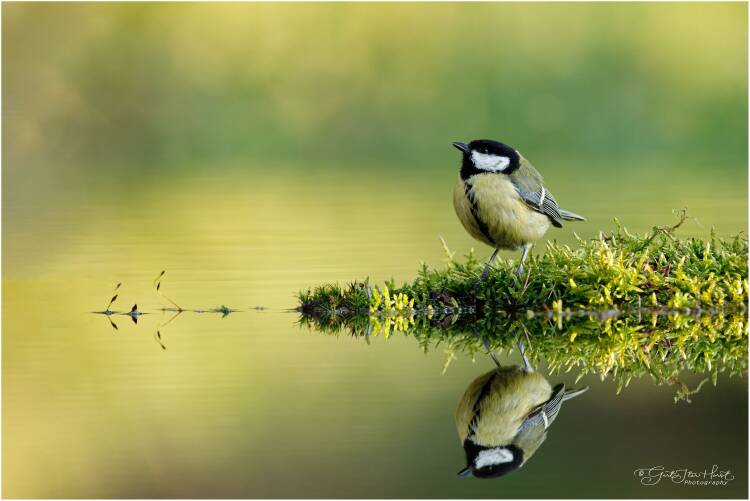
Bird behaviour during the solar eclipse
This summer, for a brief moment nothing else captured the Netherlands’ attention quite like the solar eclipse. The eclipse on 12 August, with 90% obscuration, was the largest since 1999, and the next one of this magnitude will not occur for over a hundred years (in 2135). The entire country was captivated, and many moved heaven and earth to get their hands on a pair of eclipse glasses. But how did our fellow earth inhabitants, the birds, actually react to this phenomenon? Theo Jurriens, astronomer, eclipse enthusiast, not a biologist, and a fan of curious people (young and old), called on the help of enthusiastic citizens to use a special device to detect anomalies in birdsong. His research is still ongoing, but a first analysis can already be provided.
University of Groningen Press (UGP) is an open access publisher. It provides a publishing platform for journals, books and series, inaugural lectures and open textbooks by teachers and researchers working at or with the University of Groningen. In general, these publications can be downloaded for free as PDF files. But you can also order them as (softcover) books. Recent publications include, for example ‘Sharing the Table: Culinary Journeys from the Middle East to the North of the Netherlands and the World’, ‘Grounding AI: Exploring the Role of Algorithms in Science’ and ‘The caregiver’s companion to intellectual disabilities and dementia: 100 real-life questions and answers’.
Open access publisher UGP – free journals, books and lectures

Ezinge Revisited
Annet Nieuwhof, lecturer and researcher at the Groningen Institute of Archaeology, has analysed all available archaeological data from excavations in Ezinge. This enormous project, which she worked on for ten years, was completed with the publication of the second volume of Ezinge revisited: The ancient roots of a terp settlement. Due to its significance for archaeology, Ezinge is sometimes referred to as the ‘Pompeii of the North’. The village has been continuously inhabited since 500 BC. This is unique for the Netherlands and makes Ezinge almost as old as the city of Rome. Between 1923 and 1934, the wierde (artificial dwelling mound) was carefully investigated under the leadership of Groningen professor Albert van Giffen. It is considered an iconic project in the history of Dutch archaeology. The excellently preserved material is among the crown jewels of the Groningen Institute of Archaeology.
Read more: Excavation of Ezinge terp iconic in Dutch archaeology

Test your memory
We forget almost everything we store in our memory. Most of it is lost within the very first second. Hedderik van Rijn, Professor of Cognitive and Neurosciences at the University of Groningen, has developed a test to discover how well someone can still learn. This allows him to determine how quickly something is forgotten. In the test, the participant tries to memorise as many birds, countries, or pasta shapes as possible in eight minutes. The score is then compared with that of peers. This says something not only about your memory but also about the rest of your health.
Watch the UNL video with Hedderik van Rijn
Take the memory test
In memoriam: Doeko Bosscher
On 15 June 2026, former Rector Magnificus (1998–2002), former dean, and emeritus professor of Contemporary History, Prof. Dr D.F.J. (Doeko) Bosscher, passed away. Students and colleagues remember him as extremely thoughtful, modest, and kind. As an administrator, he was careful, committed, dedicated, and integrity-driven. Bosscher was a versatile man with a keen interest in politics, among other things. His doctoral research focused on the history of the ARP (Anti-Revolutionary Party). In 1978, he himself became a municipal councillor for the PvdA (Labour Party) in the former municipality of Warffum, serving as an alderman between 1982 and 1990.
He had a special connection with the United States, a country he knew well. In 1983, he was a Fulbright Scholar at Central Michigan University, which awarded him an honorary doctorate in 2000. That same year, Bosscher himself presented an honorary doctorate to Helmut Kohl, the former chancellor who had brought about German reunification.
World War II played a significant role in Bosscher’s work; he was born in 1949. He participated in academic discussions and commemorations, reflecting on topics such as the value of freedom. He also published a book about his uncle Fritz Conijn, who was executed as a resistance fighter in 1944. In addition, Bosscher was chairman of the Supervisory Board of the Westerbork Camp Memorial Centre. Besides (popular) scientific publications, Bosscher wrote the novel Strandvondst (Beach Find) and poetry.
PHOTO: ELMER SPAARGAREN

LUMIA – Breath of the Earth
LUMIA is a grand audiovisual performance in the Martinikerk in Groningen, where live music, light art, and 3D video mapping come together. It tells the story of the Earth: from the formation of our planet to the fragile balance that humanity tests today. The monumental architecture of the Martinikerk is enveloped in light and video art, designed by the Amsterdam-based collective Veejays.com (including UG biology alumnus Hidde Kross and Martijn Adema). The music, composed by Hendrik de Boer, is performed live by the Groningen orchestra Harmonie ’67, conducted by Jan Wijenberg, with the participation of organist Henk de Vries. On 26, 27, and 28 November 2026, there will be two shows each evening (at 19:00 and 21:00).
For more information (in Dutch) and tickets
PHOTO: STUDIO OOSTRUM

Stevin Prize for Iris Sommer
On 7 October 2026, Prof. Dr Iris Sommer received the NWO Stevin Prize 2026. It is the highest scientific distinction in the Netherlands, alongside the Spinoza Prize. The prize includes a monetary award of €1.5 million, to be spent on research and knowledge utilisation. As a professor of psychiatry at the University of Groningen/ University Medical Center Groningen, Sommer is a leading researcher in the fields of schizophrenia, hallucinations, and mental health. Her work centres on one goal: improving the quality of life for people with psychiatric disorders.
Sommer trained as a physician and psychiatrist, earned her PhD cum laude in the field of language in psychosis, and founded the Stemmenpoli (Voice Clinic) at UMC Utrecht. In 2016, her research into hallucinations (‘Zie ik spoken?’ – ‘Am I seeing ghosts?’) was voted Public Research of the Year. In 2022, she received the Huibregtsen Prize for Science and Society.
Read more.
Read An adventure in the brain
(Broerstraat 5 Spring 2025)