ETIENNE YS
PHOTO: 123RF


PROPOSITION
Xiuxiang Pan – Ruimtelijke Wetenschappen
People cannot choose where they are born, but they can choose where they belong.
PHOTO: ANP/PATRICK POST
PHOTO: ANP/PATRICK POST
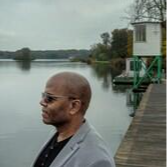
Etienne Ys (1962) studied Tax Law at the UG. After graduating, he worked as a tax inspector with the Tax and Customs Administration in the Netherlands and on the Netherlands Antilles. He was Minister of Finance from 1994 to 1995, and Prime Minister of the Netherlands Antilles from 2002 to 2003 and from 2004 to 2006. Since then, he has worked as an independent consultant advising government bodies. He also helps children who have trouble with maths through his Tur Ta Konta foundation.
Serving as Prime Minister of the Netherlands Antilles, Etienne Ys had to help dissolve
the country he was running. As a novelist, he tells the story of an island that is also in transition,
an island with black colonists and white slaves.
“
‘Speaking Dutch all day
was tough.’
Ys did not expect to have a future as a politician when he arrived in Groningen in 1980 to study tax law.
‘I was the first in my family to go to university. I went because most of my friends in secondary school were going. I knew nothing about Groningen, but one of my cousins lived in the city and he recommended it. Speaking Dutch all day was tough. I really had to concentrate to understand the Groningen accent. So at first, I used to come home with brain fog from the effort of listening to the Groningers.’
But Ys enjoyed his time in Groningen too. ‘I can’t complain about student life,’ he says with typical Groningen reserve. ‘I’d choose exactly the same degree programme if I had to do it again. Students of tax law were seen more as economists than lawyers by students of other types of law. But the economists we met on the economics course units considered us to be lawyers. That shows how broad this programme was. I returned to a country where financial services are one of the basic economic pillars, so that worked out nicely. And my knowledge of law, tax law, public finances, and economics served me very well as a politician.’
It was probably Ys’ experiences in politics that sowed the seed for his novel De barmhartige staat from 2024, shortly to be published in an English translation entitled The Merciful State. Ys rewrites history in his novel: in the 19th century, the African kingdom of Asante, in what is now Ghana, was a colonial power that had ruled Europe and America for three centuries, enslaving the populations. The king wanted to introduce democratic reforms on the basis of The Merciful State, in the novel a book similar to De l’esprit des Lois by Montesquieu. But he met with resistance from his political opponents and his own royal family.
The roles reversed
‘I can’t remember where the idea came from,’ says Ys. ‘I wanted to write an exciting political thriller, a bit like House of Cards or the Dan Brown books; something that gave people a peek behind the political scenes. But my main aim was to make readers think about humans and humanity, and how we treat each other. I was inspired by Noah Harari’s books, particularly Sapiens, A Brief History of Humankind.’
To help readers step out of their comfort zone, Ys reverses the roles: the colonists are black and the slaves are white. ‘Trying to envisage this reversal is a challenge in itself. It proved really difficult for some readers. They knew that the slaves in the book were white and the slave masters black, but reading about a blond slave girl still wrong-footed them. Every time, they had to consciously remember that the slave wasn’t black, but a blond woman.’
Ys is now thinking about his next novel. This will be set in the future rather than the past. ‘When’s it coming out? I’m not setting a deadline. I need to be able to write something one day, and delete it the next simply because I don’t like it anymore. This keeps me going until I’ve finished. Having said that, the only way to stop me altering things is to tear the manuscript out of my hands. That’s the fascinating thing about writing; the feeling of being in a continuous creative flow.’
Having been born and bred on Curaçao, Etienne Ys followed the developments in neighbouring Venezuela in early January very closely. American troops invaded the country and captured President Maduro and his wife. ‘Of course, nobody knew what was going to happen,’ says Ys, who still lives on Curaçao. ‘Some people were scared that we would be drawn into a war. But personally, I didn’t expect Venezuela to fight back, so I wasn’t overly concerned.’
Venezuela and Curaçao are friends
The people of Curaçao were not only worried about the fate of their own island, but also about that of their good neighbour. ‘Venezuela and Curaçao are friends. The liberator of Latin-America, Simón Bolívar, sought refuge in a house on Curaçao. And in the 19th century, we supported Venezuela in its war of independence. So we have historical, cultural, and economic ties, which will always remain strong, irrespective of who governs Venezuela.’
Meanwhile, the government in Curaçao is rubbing its hands in glee at the opportunities offered by refining Venezuelan oil. Ys is not convinced. ‘The refinery is currently a scrap heap, so a lot of money would have to be invested first. But even before it closed in 2019, the refinery generated little revenue while causing significant environmental pollution. This is not good for tourism, our main source of income. Tourism is a growing market in the Caribbean, and Curaçao is leading the way.’
Ys should know as he was Prime Minister in two Netherlands-Antillean cabinets between 2002 and 2006. While in office, he helped with the dissolution of his own country. The task was completed in 2010: Curaçao and St Maarten became autonomous countries within the Kingdom of the Netherlands; Saba, St Eustatius, and Bonaire became special municipalities. Ys: ’As Prime Minister, I took part in the round table discussions in 2005, where the basis for dissolving the Netherlands Antilles was laid. After I left office, my successor asked me to act as negotiator on behalf of the Netherlands Antilles.’
The Antillen split up
Salient detail: Ys is a member and co-founder of the Partido Antiá Restrukturá – Party for Restructured Antilles – which currently operates under the name Partido Alternativa Real (PAR). ‘The PAR was founded in 1993 in an effort to keep the Netherlands Antilles together. Shortly before, a majority of the Curaçao population had voted in a referendum in favour of retaining and restructuring the Netherlands Antilles. But this plan did not receive sufficient support from the other parties and islands, and by a twist of fate, the PAR ultimately became responsible for the dissolution of the Antilles. I worked on this task with pain in my heart, because I was (and still am) Netherlands-Antillean in heart and soul. But as they say, it is no use crying over spilt milk’.
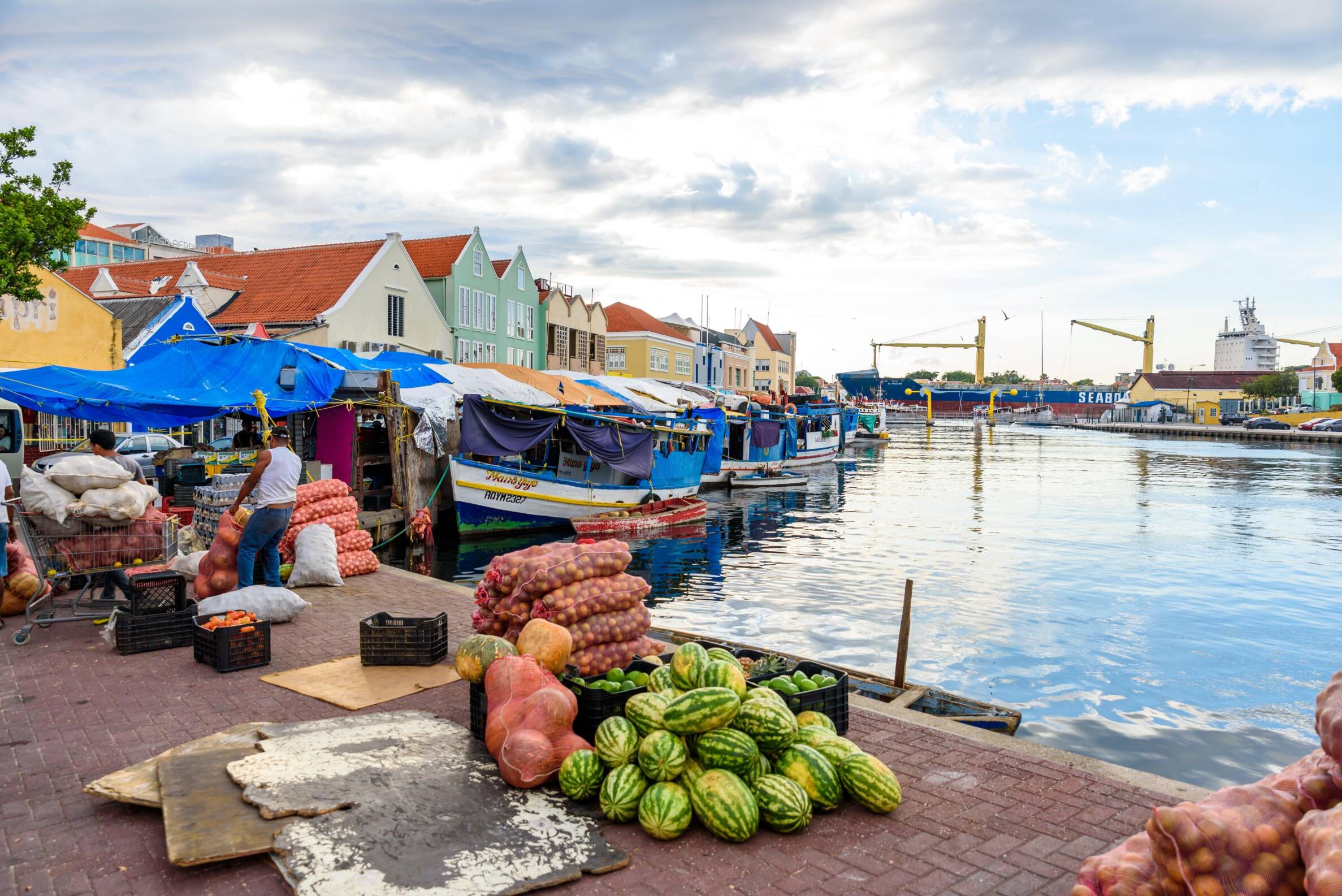
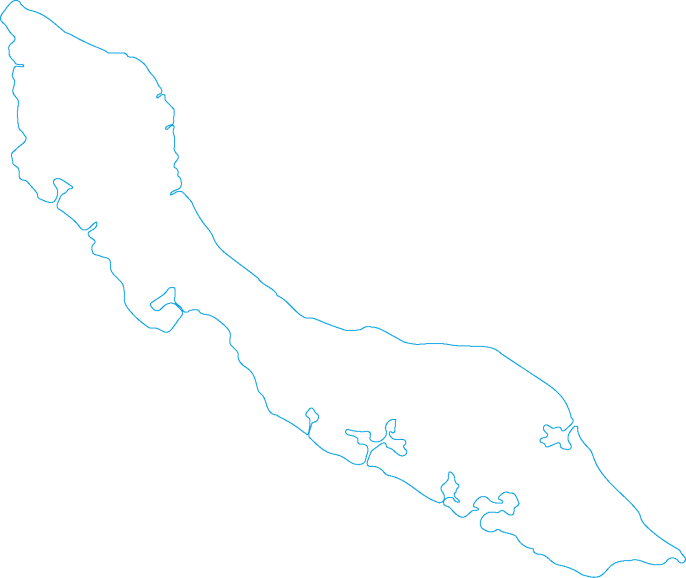
CURAÇAO
WILLEMSTAD
TEXT: BERT PLATZER
PHOTO: 123RF
ETIENNE YS
Xiuxiang Pan – Ruimtelijke Wetenschappen
People cannot choose where they are born, but they can choose where they belong.
PHOTO: ANP/PATRICK POST
Etienne Ys (1962) studied Tax Law at the UG. After graduating, he worked as a tax inspector with the Tax and Customs Administration in the Netherlands and on the Netherlands Antilles. He was Minister of Finance from 1994 to 1995, and Prime Minister of the Netherlands Antilles from 2002 to 2003 and from 2004 to 2006. Since then, he has worked as an independent consultant advising government bodies. He also helps children who have trouble with maths through his Tur Ta Konta foundation.
Ys did not expect to have a future as a politician when he arrived in Groningen in 1980 to study tax law.
‘I was the first in my family to go to university. I went because most of my friends in secondary school were going. I knew nothing about Groningen, but one of my cousins lived in the city and he recommended it. Speaking Dutch all day was tough. I really had to concentrate to understand the Groningen accent. So at first, I used to come home with brain fog from the effort of listening to the Groningers.’
But Ys enjoyed his time in Groningen too. ‘I can’t complain about student life,’ he says with typical Groningen reserve. ‘I’d choose exactly the same degree programme if I had to do it again. Students of tax law were seen more as economists than lawyers by students of other types of law. But the economists we met on the economics course units considered us to be lawyers. That shows how broad this programme was. I returned to a country where financial services are one of the basic economic pillars, so that worked out nicely. And my knowledge of law, tax law, public finances, and economics served me very well as a politician.’
It was probably Ys’ experiences in politics that sowed the seed for his novel De barmhartige staat from 2024, shortly to be published in an English translation entitled The Merciful State. Ys rewrites history in his novel: in the 19th century, the African kingdom of Asante, in what is now Ghana, was a colonial power that had ruled Europe and America for three centuries, enslaving the populations. The king wanted to introduce democratic reforms on the basis of The Merciful State, in the novel a book similar to De l’esprit des Lois by Montesquieu. But he met with resistance from his political opponents and his own royal family.
The roles reversed
‘I can’t remember where the idea came from,’ says Ys. ‘I wanted to write an exciting political thriller, a bit like House of Cards or the Dan Brown books; something that gave people a peek behind the political scenes. But my main aim was to make readers think about humans and humanity, and how we treat each other. I was inspired by Noah Harari’s books, particularly Sapiens, A Brief History of Humankind.’
To help readers step out of their comfort zone, Ys reverses the roles: the colonists are black and the slaves are white. ‘Trying to envisage this reversal is a challenge in itself. It proved really difficult for some readers. They knew that the slaves in the book were white and the slave masters black, but reading about a blond slave girl still wrong-footed them. Every time, they had to consciously remember that the slave wasn’t black, but a blond woman.’
Ys is now thinking about his next novel. This will be set in the future rather than the past. ‘When’s it coming out? I’m not setting a deadline. I need to be able to write something one day, and delete it the next simply because I don’t like it anymore. This keeps me going until I’ve finished. Having said that, the only way to stop me altering things is to tear the manuscript out of my hands. That’s the fascinating thing about writing; the feeling of being in a continuous creative flow.’
“
‘Speaking Dutch all day
was tough.’
Having been born and bred on Curaçao, Etienne Ys followed the developments in neighbouring Venezuela in early January very closely. American troops invaded the country and captured President Maduro and his wife. ‘Of course, nobody knew what was going to happen,’ says Ys, who still lives on Curaçao. ‘Some people were scared that we would be drawn into a war. But personally, I didn’t expect Venezuela to fight back, so I wasn’t overly concerned.’
Venezuela and Curaçao are friends
The people of Curaçao were not only worried about the fate of their own island, but also about that of their good neighbour. ‘Venezuela and Curaçao are friends. The liberator of Latin-America, Simón Bolívar, sought refuge in a house on Curaçao. And in the 19th century, we supported Venezuela in its war of independence. So we have historical, cultural, and economic ties, which will always remain strong, irrespective of who governs Venezuela.’
Meanwhile, the government in Curaçao is rubbing its hands in glee at the opportunities offered by refining Venezuelan oil. Ys is not convinced. ‘The refinery is currently a scrap heap, so a lot of money would have to be invested first. But even before it closed in 2019, the refinery generated little revenue while causing significant environmental pollution. This is not good for tourism, our main source of income. Tourism is a growing market in the Caribbean, and Curaçao is leading the way.’
Ys should know as he was Prime Minister in two Netherlands-Antillean cabinets between 2002 and 2006. While in office, he helped with the dissolution of his own country. The task was completed in 2010: Curaçao and St Maarten became autonomous countries within the Kingdom of the Netherlands; Saba,
St Eustatius, and Bonaire became special municipalities. Ys: ’As Prime Minister,
I took part in the round table discussions in 2005, where the basis for dissolving the Netherlands Antilles was laid. After I left office, my successor asked me to act as negotiator on behalf of the Netherlands Antilles.’
The Antillen split up
Salient detail: Ys is a member and co-founder of the Partido Antiá Restrukturá – Party for Restructured Antilles – which currently operates under the name Partido Alternativa Real (PAR). ‘The PAR was founded in 1993 in an effort to keep the Netherlands Antilles together. Shortly before, a majority of the Curaçao population had voted in a referendum in favour of retaining and restructuring the Netherlands Antilles. But this plan did not receive sufficient support from the other parties and islands, and by a twist of fate, the PAR ultimately became responsible for the dissolution of the Antilles. I worked on this task with pain in my heart, because I was (and still am) Netherlands-Antillean in heart and soul. But as they say, it is no use crying over spilt milk’.
Serving as Prime Minister of the Netherlands Antilles, Etienne Ys had to help dissolve the country he was running. As a novelist, he tells the story of an island that is also in transition,
an island with black colonists and white slaves.
TEXT: BERT PLATZER
PHOTO: ANP/PATRICK POST
WILLEMSTAD
CURAÇAO

PROPOSITION