Prepping
PHOTO: JORIS VAN GENNIP / ANP


PROPOSITION
Tim Otten – Medische Wetenschappen
Clinicians often tend to view medicines as products that fall like manna from heaven.
Erik Frijlink
PHOTO: NEDERLANDS INSTITUUT PUBLIEKE VEILIGHEID
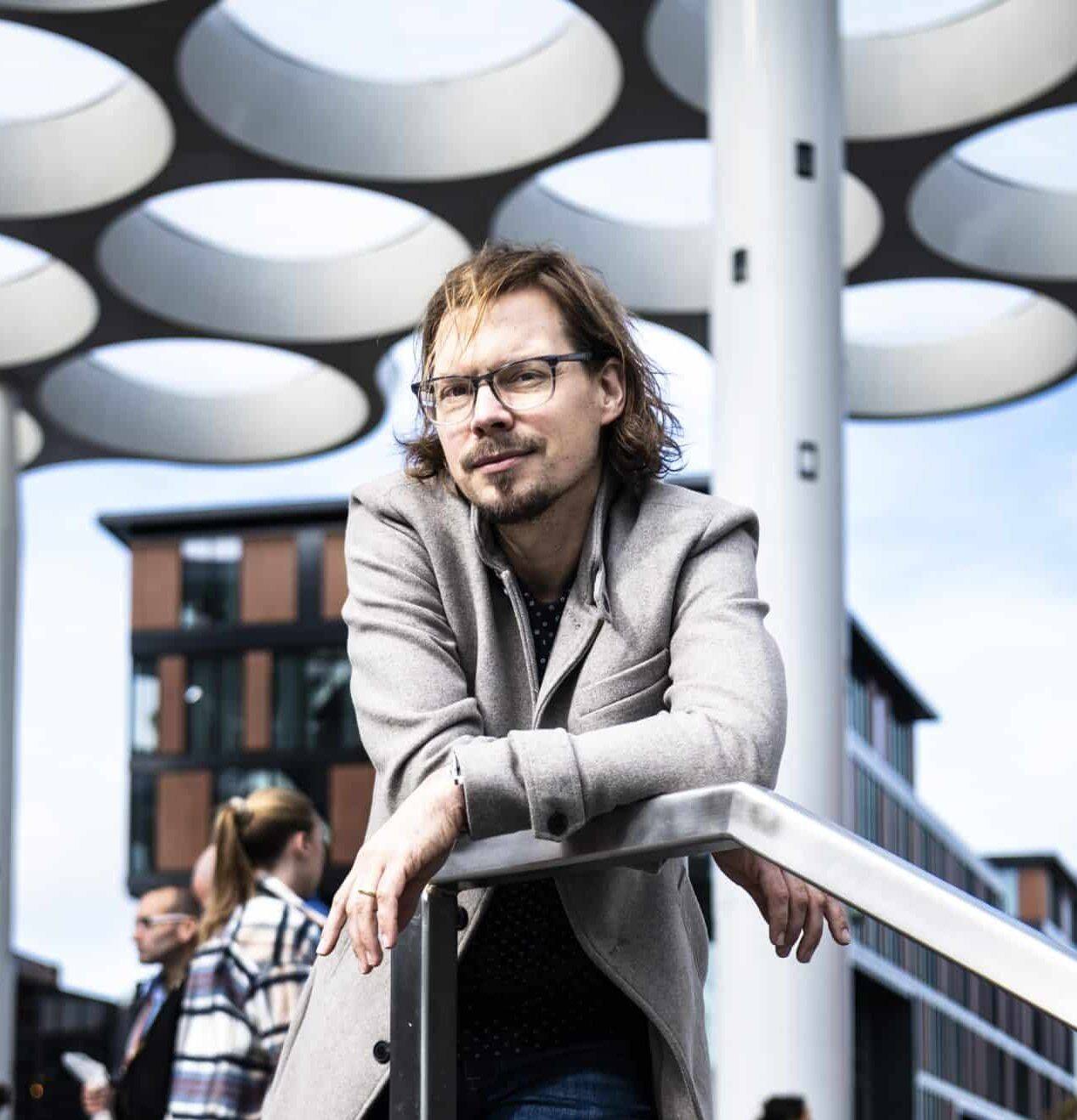
Michel Dückers (1979) studied Public Administration at Twente University. He was awarded a PhD in 2009 by Utrecht University (quality and safety management in healthcare), and in 2019 by the University of Innsbruck (international perspective of disasters on mental health). He advises and supports national and local government bodies on dealing with emergency situations and is affiliated to the ARQ National Psychotrauma Centre, the Netherlands Institute for Public Safety, the Nivel Knowledge Centre, and the National Institute for Public Health and the Environment. Since December 2020, he has also been Professor by special appointment of Crises, Safety, and Health at the UG.
“
‘The biggest problems arise when people feel out of control.’
TEXT: BERT PLATZER
Can we all sleep soundly now that we have a government brochure explaining how to
prepare for emergencies? According to Professor by special appointment Michel Dückers,
warning people about imminent danger can stimulate their resilience, but can also
result in a sort of Mad Max scenario.
‘Social resilience only exists if large sections of society are willing to take part. This is known as a ‘whole-of-society’ approach, whereby the government works alongside citizens, societal organizations, and industry to set up facilities such as support centres during emergencies. Large supermarkets, for example, are extremely good at the logistic process of stocking their stores efficiently. Should drinking water need to be distributed, they are the perfect party to organize the process needed for this.’
There are only nine meals between civilisation and anarchy
The answer to the question of how to deal with disasters and emergencies is really no more than guesswork, although Dückers prefers to call it ‘educated guesswork’. ‘There are no proper studies evaluating situations in which people have had to go three days or even two weeks without basic amenities. Everything we say about this is simply one big thought experiment. I think that most people would get through the first 72 hours, but strictly speaking, this too is an educated guess. It is difficult to pinpoint exactly when an educated guess becomes pure speculation. But what would happen if it lasted two weeks or six months, and we found ourselves in a situation where survival of the fittest applied? Would we end up in a kind of Mad Max film, with armed motorcycle gangs seizing power and fighting over scarce resources? When viewed from the safety and prosperity of our current setting, this type of sinister futuristic situation seems far removed, but some places in the world are much closer to such film scenarios.’
The 72-hour time frame, which has been used in crisis management for decades, was largely chosen to prepare certain organizations for crisis response and to make an abstract threat more concrete for citizens. ‘There’s an American saying that goes: “There are only nine meals between mankind and anarchy,” so there’s probably some truth in those 72 hours. At first, it’s easy to be polite and say: "No, you were first. Take that meal.” But if you’re still worried about supplies three days later, and you’ve got two hungry children at home, you may well find yourself fighting for the last bit of food.’
How has Dückers prepared himself for an emergency? ‘I’m getting there, partly thanks to the brochure and all the interviews I've done subsequently. During an interview with EenVandaag (TV programme), they looked in my pantry at home, which turned out to be rather sparse. So my wife and I decided to stock up on extra food and water. A few weeks ago, I did an interview with the magazine of the AD newspaper. The editor-in-chief wrote that after the interview, she’d retrieved the booklet from the waste paper. This is what it’s all about; getting people talking about the subject and raising awareness of what might happen if we lose all power for a couple of days. You can’t withdraw cash, can’t charge your phone, there won’t be any hot water or heating. These are real threats. And it feels good to have some control because you’ve taken precautions. The biggest problems arise when people feel out of control.’
Taking account of growing polarisation
Dückers’ chair was instigated in 2020, in association with the ARQ National Psychotrauma Centre, the Netherlands Institute for Public Safety, the Nivel Knowledge Centre, and the National Institute for Public Health and the Environment. He does not only focus on social resilience to emergency situations, but also, and mainly, on the impact of disasters. ‘How are you supposed to deal with a disaster? The ‘resilience ideal’, a widely used term at the moment, seems to be playing an increasingly large part in this. It refers to your ability to overcome setbacks, withstand disruption, bounce back, recover, adapt.’
Dückers would not immediately classify power outages, attacks, pandemics, and extreme weather as real disasters. But there are definitely factors that can give these ‘regular’ emergency situations an extra dimension. ‘You have to take into account the increasing polarization in society, as well as ongoing geopolitical changes and conflicts. Ultimately, a whole range of developments come together, potentially creating very dangerous scenarios.
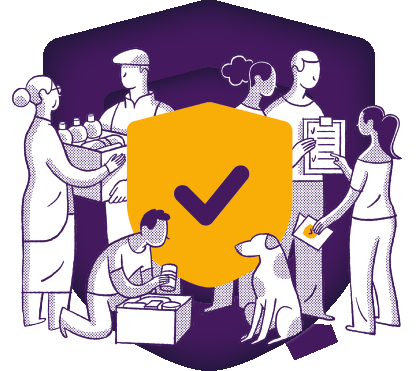
A long-term outage of power or water, a terrorist attack, extreme weather such as that seen in South Limburg five years ago, or a cyberattack: the government thinks that we should not underestimate the likelihood of an emergency. So last winter, everyone in the Netherlands found a copy of the brochure Bereid je voor op een noodsituatie (How to prepare for an emergency) in their letterbox. The brochure explains how to stay safe during the first 72 hours of a disaster or crisis.
Go completely overboard
‘If you look at all the different possibilities and consider what could happen where, the chance of a disaster is high’, says Michel Dückers, Professor by special appointment of Crises, Safety, and Health. On the one hand, he does not think we should panic, but on the other hand, we must not pretend that everything is fine. ‘Sounds like a contradiction, doesn’t it? Our entire evolution is about survival and we can only do that if we effectively anticipate threats and risks. So it’s only rational to think about threats, but you can take things too far.’
He does not think that producing the brochure was a bad idea. ‘The definition of a disaster is an event with major consequences and significant human suffering that the government cannot immediately manage with the available capacity. So it is sensible that the government has made people aware of the risks and encouraged them to take precautions. One of the things I like about the booklet is that it doesn’t only focus on the traditional self-sufficiency concept, but also explicitly advises people to work together and take care of the more vulnerable people in their vicinity.’
is one big thought
experiment
PHOTO: JORIS VAN GENNIP / ANP
Prepping
PROPOSITION
Tim Otten – Medische Wetenschappen
Clinicians often tend to view medicines as products that fall like manna from heaven.
Erik Frijlink
PHOTO: NEDERLANDS INSTITUUT PUBLIEKE VEILIGHEID
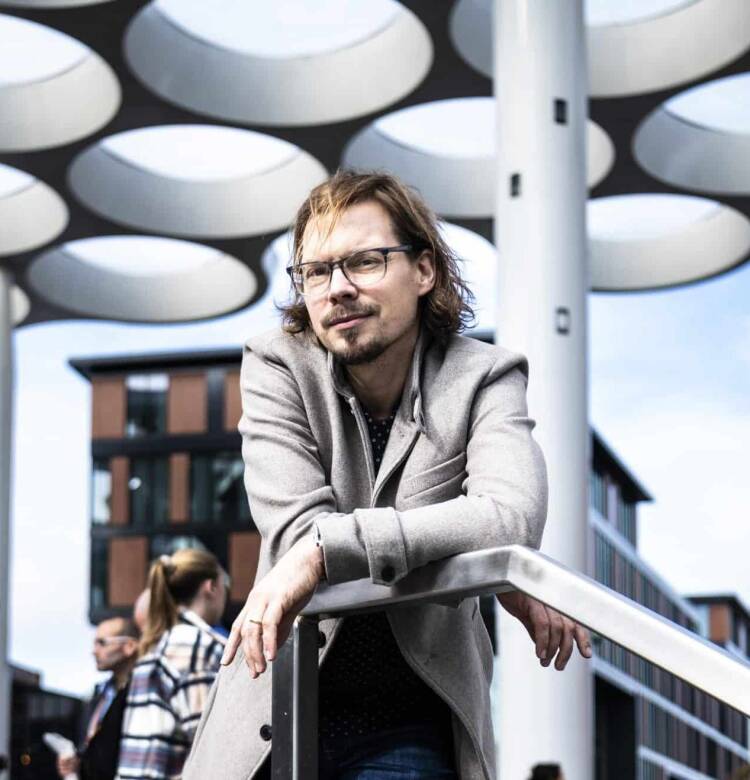
Michel Dückers (1979) studied Public Administration at Twente University. He was awarded a PhD in 2009 by Utrecht University (quality and safety management in healthcare), and in 2019 by the University of Innsbruck (international perspective of disasters on mental health). He advises and supports national and local government bodies on dealing with emergency situations and is affiliated to the ARQ National Psychotrauma Centre, the Netherlands Institute for Public Safety, the Nivel Knowledge Centre, and the National Institute for Public Health and the Environment. Since December 2020, he has also been Professor by special appointment of Crises, Safety, and Health at the UG.
‘Social resilience only exists if large sections of society are willing to take part. This is known as a ‘whole-of-society’ approach, whereby the government works alongside citizens, societal organizations, and industry to set up facilities such as support centres during emergencies. Large supermarkets, for example, are extremely good at the logistic process of stocking their stores efficiently. Should drinking water need to be distributed, they are the perfect party to organize the process needed for this.’
There are only nine meals between civilisation and anarchy
The answer to the question of how to deal with disasters and emergencies is really no more than guesswork, although Dückers prefers to call it ‘educated guesswork’. ‘There are no proper studies evaluating situations in which people have had to go three days or even two weeks without basic amenities. Everything we say about this is simply one big thought experiment. I think that most people would get through the first 72 hours, but strictly speaking, this too is an educated guess. It is difficult to pinpoint exactly when an educated guess becomes pure speculation. But what would happen if it lasted two weeks or six months, and we found ourselves in a situation where survival of the fittest applied? Would we end up in a kind of Mad Max film, with armed motorcycle gangs seizing power and fighting over scarce resources? When viewed from the safety and prosperity of our current setting, this type of sinister futuristic situation seems far removed, but some places in the world are much closer to such film scenarios.’
The 72-hour time frame, which has been used in crisis management for decades, was largely chosen to prepare certain organizations for crisis response and to make an abstract threat more concrete for citizens. ‘There’s an American saying that goes: “There are only nine meals between mankind and anarchy,” so there’s probably some truth in those 72 hours. At first, it’s easy to be polite and say: "No, you were first. Take that meal.” But if you’re still worried about supplies three days later, and you’ve got two hungry children at home, you may well find yourself fighting for the last bit of food.’
How has Dückers prepared himself for an emergency? ‘I’m getting there, partly thanks to the brochure and all the interviews I've done subsequently. During an interview with EenVandaag (TV programme), they looked in my pantry at home, which turned out to be rather sparse. So my wife and I decided to stock up on extra food and water. A few weeks ago, I did an interview with the magazine of the AD newspaper. The editor-in-chief wrote that after the interview, she’d retrieved the booklet from the waste paper. This is what it’s all about; getting people talking about the subject and raising awareness of what might happen if we lose all power for a couple of days. You can’t withdraw cash, can’t charge your phone, there won’t be any hot water or heating. These are real threats. And it feels good to have some control because you’ve taken precautions. The biggest problems arise when people feel out of control.’
“
‘The biggest problems arise when people feel out of control.’
Taking account of growing polarisation
Dückers’ chair was instigated in 2020, in association with the ARQ National Psychotrauma Centre, the Netherlands Institute for Public Safety, the Nivel Knowledge Centre, and the National Institute for Public Health and the Environment. He does not only focus on social resilience to emergency situations, but also, and mainly, on the impact of disasters. ‘How are you supposed to deal with a disaster? The ‘resilience ideal’, a widely used term at the moment, seems to be playing an increasingly large part in this. It refers to your ability to overcome setbacks, withstand disruption, bounce back, recover, adapt.’
Dückers would not immediately classify power outages, attacks, pandemics, and extreme weather as real disasters. But there are definitely factors that can give these ‘regular’ emergency situations an extra dimension. ‘You have to take into account the increasing polarization in society, as well as ongoing geopolitical changes and conflicts. Ultimately, a whole range of developments come together, potentially creating very dangerous scenarios.
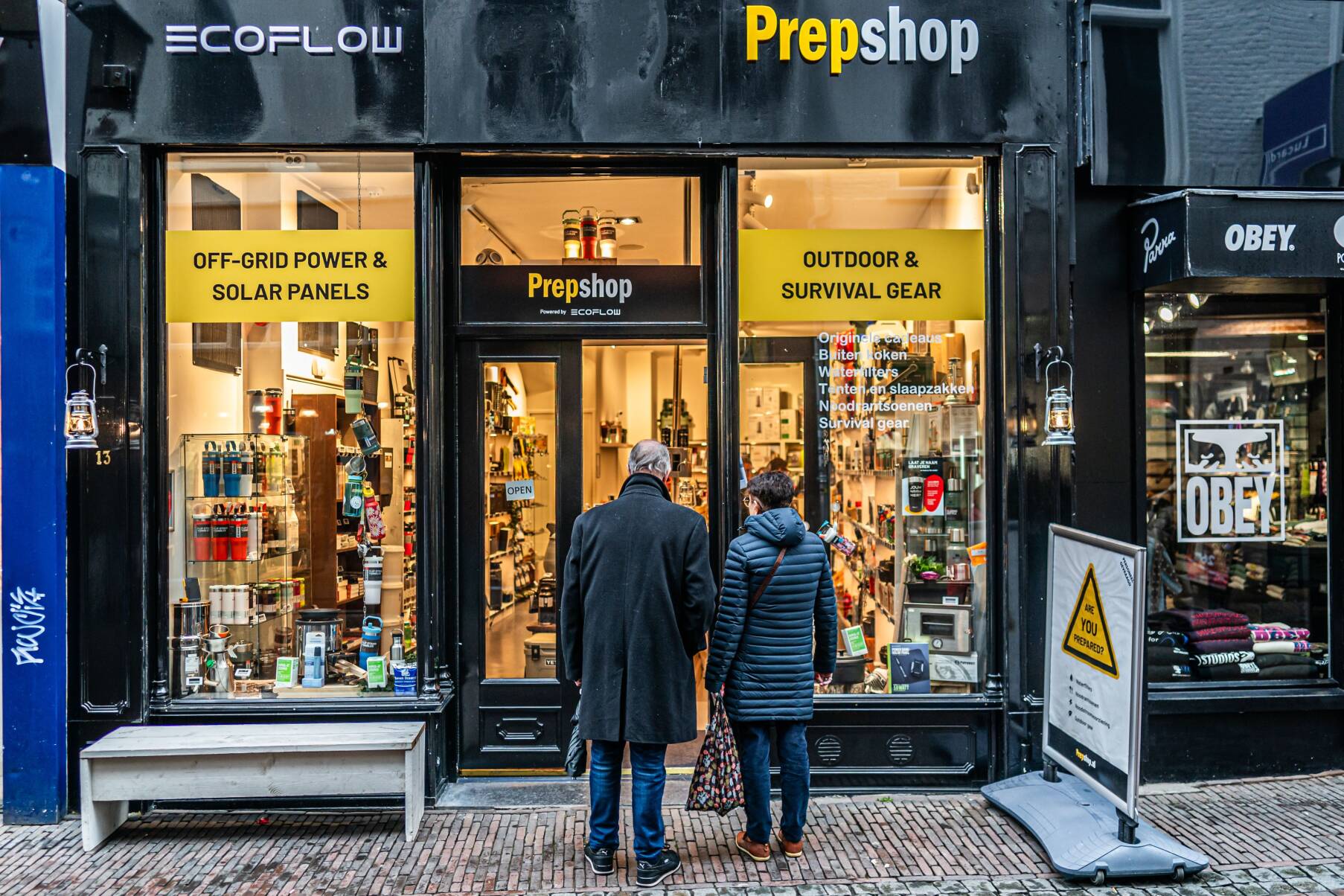
A long-term outage of power or water, a terrorist attack, extreme weather such as that seen in South Limburg five years ago, or a cyberattack: the government thinks that we should not underestimate the likelihood of an emergency. So last winter, everyone in the Netherlands found a copy of the brochure Bereid je voor op een noodsituatie (How to prepare for an emergency) in their letterbox. The brochure explains how to stay safe during the first 72 hours of a disaster or crisis.
Go completely overboard
‘If you look at all the different possibilities and consider what could happen where, the chance of a disaster is high’, says Michel Dückers, Professor by special appointment of Crises, Safety, and Health. On the one hand, he does not think we should panic, but on the other hand, we must not pretend that everything is fine. ‘Sounds like a contradiction, doesn’t it? Our entire evolution is about survival and we can only do that if we effectively anticipate threats and risks. So it’s only rational to think about threats, but you can take things too far.’
He does not think that producing the brochure was a bad idea. ‘The definition of a disaster is an event with major consequences and significant human suffering that the government cannot immediately manage with the available capacity. So it is sensible that the government has made people aware of the risks and encouraged them to take precautions. One of the things I like about the booklet is that it doesn’t only focus on the traditional self-sufficiency concept, but also explicitly advises people to work together and take care of the more vulnerable people in their vicinity.’
Can we all sleep soundly now that we have a government brochure explaining how to prepare for emergencies? According to Professor by special appointment Michel Dückers,
warning people about imminent danger can stimulate their resilience, but can also result in a sort of Mad Max scenario.
is one big thought
experiment
TEXT: BERT PLATZER